

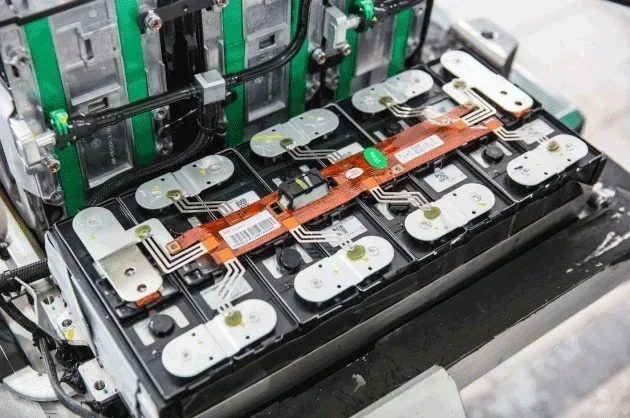
Battery safety is the most critical factor in electric vehicle (EV) development. A secure battery system requires more than just high-quality cells. It depends on advanced structural design, precise thermal management, and reliable electronic control systems.
PCBONLINE is a one-stop cell contact system and battery management system manufacturer for building power battery packs and other new energy system battery packs.
This article explores the technical innovations in battery pack safety, focusing on modular structures, cell contact systems (CCS), and battery management systems (BMS).
In this article:
Part 1: Structural Design for Battery Modules Part 2: The Role of Cell Contact Systems (CCS) Part 3: Battery Management Systems (BMS) Part 4: One-Stop Manufacturing for Battery SafetyPart 1. Structural Design for Battery Modules
Battery packs often use long, thin cells, commonly known as blade cells. These cells require specialized housing to ensure insulation and structural integrity.
Replacing Aluminum with Lightweight Insulation

Traditionally, battery modules used aluminum end plates for support. However, new designs favor lightweight insulating materials like Expanded Polypropylene (EPP).
- Weight reduction: EPP end plates have a density below 0.2g/cm3, which is significantly lighter than aluminum's 2.7g/cm3.
- Integrated wiring: Insulating end plates can feature built-in wiring channels (grooves). This eliminates the need for extra gaps within the pack for cable management, increasing energy density.
- Safety: These materials provide essential insulation and protection during collisions or high-pressure situations.
Managing Battery Expansion
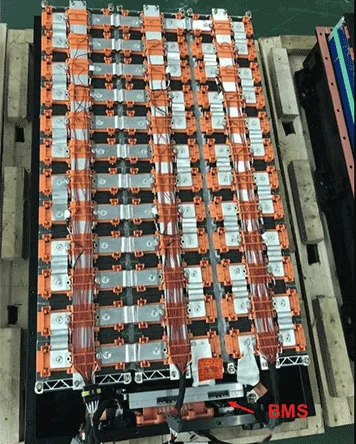
Battery cells naturally expand over their lifecycle (End of Life or EOL expansion). Managing this pressure is vital for safety.
- Elastic components: Designers place elastic materials, such as PU foam, between the module end plates and the outer casing.
- Expansion absorption: These foam layers are designed to compress as the cells grow. Typically, they can be compressed to 75%–80% of their original thickness to absorb the expansion force.
- Assembly precision: To make assembly easier, these foam pieces can be vacuum-sealed in plastic film. Once the module is in place, the film is removed, allowing the foam to expand and create a tight, pre-pressed fit.
Part 2. The Role of Cell Contact Systems (CCS)
The Cell Contact System (CCS) connects the cells and the battery management system, and it acts as the path of slow charge when the battery cells' power reach 90% or above. It is as important as the cells themselves.
In a battery pack, the CCS module plays an important role in connection and safety.
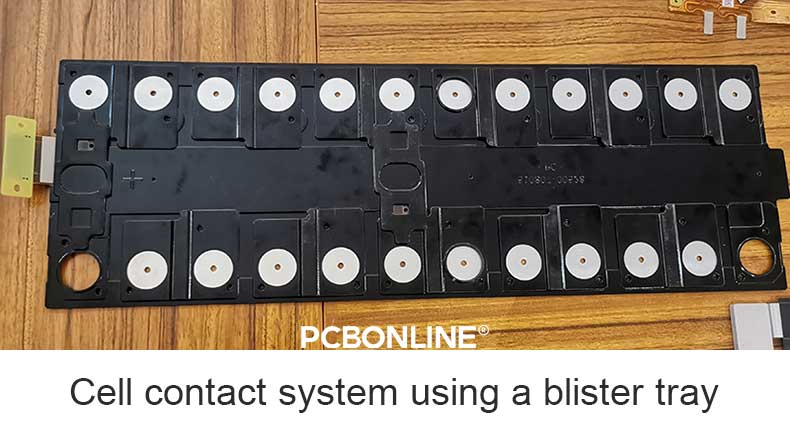
A CCS consists of a signal acquisition layer (PCB, FPC, or FDC), nickel sheets, aluminum/copper busbars for power transmission, NTC thermistors, connectors, and supporting insulation structures.
- Signal collection: The CCS monitors the voltage and temperature of every cell in the pack.
- Current distribution: It uses nickel-plated or copper busbars to connect cells in series or parallel.
- Protection: Protective covers are often added to the CCS to prevent damage to the delicate PCB or FPC components.
CCS Manufacturing Solutions
High-quality CCS production requires expertise in both electronics and mechanical assembly. The PCBA (Printed Circuit Board Assembly) provider PCBONLINE offers end-to-end services, including:
- Custom FPC/FDC production: Flexible circuits allow for thinner, lighter, and more adaptable signal layers.
- Component sourcing: Procurement of NTC thermistors for temperature sensing, customized nickel plates, and insulation brackets.
- SMT assembly: Precise Surface Mount Technology is used to attach sensors and connectors directly to the signal layer.
Part 3. Battery Management Systems (BMS) and PCBA
The BMS is the brain of the battery pack. It controls the cell working and charging states and ensures the battery operates within safe limits.
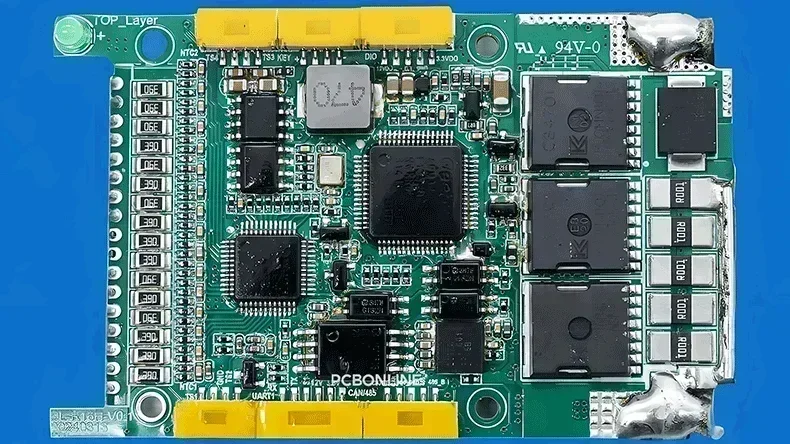
In battery pack safety, the BMS plays these functions:
- Cell balancing: Ensures all cells charge and discharge equally to prevent overcharging.
- Thermal control: Triggers cooling or heating systems based on real-time temperature data.
- State calculation: Estimates the State of Charge (SoC) and State of Health (SoH).
How about BMS design and manufacturing?
A reliable BMS starts with a high-performance PCB. Advanced manufacturing involves:
- Rigid-flex PCB design: Combining rigid and flexible boards to save space and improve durability.
- Thermal resistance: Using materials that can withstand high temperatures and ensure long-term stability.
- Full pack integration: Integrating the BMS with the CCS and the entire battery pack housing for a seamless electrical connection.
Part 4. One-Stop Manufacturing for Battery Safety
Achieving maximum safety requires a holistic approach to manufacturing. Working with a specialized provider like PCBONLINE ensures that all components work together perfectly.
If you haven't completed your battery pack design, including the BMS and the CCS, you can let us design for you. You can draw the outline of the battery pack and tell us the line connection sequence of the cells and CCS; if possible, send the 3D drawing of the entire pack so that we can understand your CCS and BMS demands.
Our expertise is currently focused on:
- Energy Storage CCS: Robust designs for large-scale and residential ESS.
- Light Electric Vehicles: Tailored solutions for two- and three-wheelers.
- Low-Speed Electric Vehicles: Specialized systems for golf carts and similar utility vehicles.
And our integrated services include:
- From design to final assembly, a comprehensive service provider covers design support, material sourcing, FPC/PCB/FDC manufacturing and assembly, and quality testing.
- Design support: Optimizing the layout of the BMS and CCS for safety and efficiency.
- Multi-material sourcing: Handling everything from copper busbars to plastic insulation supports.
- Advanced SMT: Ensuring every NTC sensor and wire harness is perfectly soldered.
- Quality testing: Comprehensive testing for electrical continuity, insulation, and thermal performance.
We take care of CCS manufacturing traceability and print a QR code on the FPC/PCB/integrated busbar PCBA that contains all the information on the manufacturing operations, time, and specs.
Quality is paramount. We focus on weight control to ensure the consistency of all the FPC/PCB/integrated busbars, nickel sheets, NTCs, connectors, insulation films, copper busbars, and blister tray/plastic bracket.
All the inspections during the FPC/PCB/integrated busbar assembly for the CCS are 3D, including SPI, AOI, and X-ray. The high-accuracy images and dimensions are retained for 15 years for traceability.
We not only provide one-stop manufacturing for the CCS but also can design the CCS and BMS according to your battery pack demands.
We have strong manufacturing capabilities and technical experience in new energy automotive and energy storage electronics, especially thermal and electric management.
We are committed to quality, offering a 5-year quality guarantee on our CCS and BMS for battery packs, ensuring your battery systems remain safe and efficient for years to come. Please get in touch with us by email at info@pcbonline.com if you have any CCS demands.
Conclusion
Power battery safety is a complex engineering challenge. By using lightweight insulating materials, efficient expansion management, and high-precision CCS and BMS components, manufacturers can build safer, more efficient vehicles. Choosing a partner that understands the entire manufacturing lifecycle, from the raw PCB to the final assembly, is the best way to ensure quality and reliability in the evolving EV market.
Battery Management System Manufacturing at PCBONLINE.pdf
CCS Product Introduction - PCBONLINE.pdf


