

OEM, ODM, and JDM are three contract models in electronics manufacturing. Each model assigns the design work and the manufacturing work to different parties. A hardware engineer needs to know who owns the Gerber files, who writes the firmware, and who carries the risk when the first articles fail.
This guide defines each model for electronics manufacturing, compares OEM, ODM, and JDM side by side, and shows real projects from PCBONLINE.

OEM Meaning in Electronics Manufacturing
OEM electronics manufacturing is the oldest of the three models, and most hardware engineers already work inside it. Your team designs the product, and the manufacturer fabricates and assembles the product to your files.
The files you provide. A production-ready OEM package contains the Gerber or ODB++ files, the drill files, the BOM, the centroid file, the assembly drawings, and the test specification. A complete package cuts the engineering questions and shortens the quotation.
What a capable OEM adds. The value sits in the DFM review before production. Our engineers check the PCB layout for manufacturability, review the BOM for lifecycle and availability risks, and flag test point coverage before we release the SMT program. A footprint error caught at review is an email. A footprint error caught after reflow is a scrapped lot.
OEM at PCBONLINE. We have manufactured OEM PCBA since 2005. We operate two large PCB manufacturing bases in Jiangsu and Jiangxi Provinces and a turnkey PCB assembly factory in Shenzhen. Every PCB we assemble goes through 3D SPI and 3D AOI on our SMT lines, and we perform a first-article inspection before volume production.
OEM meaning. OEM stands for original equipment manufacturer. In electronics manufacturing, an OEM produces PCBs, PCBAs, and finished devices according to the customer's design files. The customer owns the schematic, the PCB layout, the firmware, and the product specification. The manufacturer owns the process record.
You can view three OEM electronics manufacturing projects at PCBONLINE as showcases.
Industrial gateway PCBA. The device had to maintain stable operation from -40°C to +85°C under strong electromagnetic interference and continuous duty. We selected industrial-grade wide-temperature components, applied high-reliability PCB fabrication and assembly processes, completed the EMC review and testing, and put the PCBA through functional, aging, and reliability validation. The customer received a stable manufacturing setup ready for harsh field environments and repeatable volume production.

AI server PCBA. For the AI server project, we fabricated the 12-layer high-speed HDI PCB with back drilling, sourced the full BOM, assembled and tested the PCBA, and completed the enclosure and wiring harness integration. We delivered on the customer's tight launch schedule.
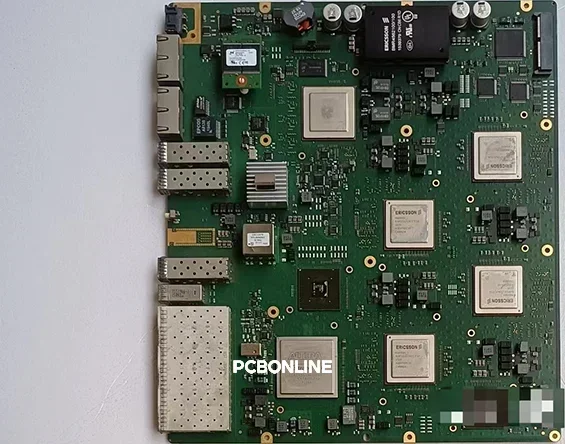
Smart wearable PCBA. For the wearable device, we placed 01005 components, integrated a multilayer FPC, selected low-power components, and optimized the power management. DFM and DFT reviews, plus IPC Class 3 process controls, reduced the risk before volume production. We finished the project with assembly, functional testing, and reliability validation.

ODM Meaning in Electronics Manufacturing

ODM electronics manufacturing moves the design work to the manufacturer. The customer brings the market requirement, and the manufacturer designs and manufactures the product.
ODM meaning. ODM stands for original design manufacturer. In electronics manufacturing, an ODM owns the R&D. Circuit design, PCB layout, firmware, enclosure design support, and certification preparation all sit with the manufacturer. The customer defines the application, the performance targets, and the price point, then brands and sells the finished device.
When ODM fits. ODM fits companies that know a market but have no hardware R&D team. A utility company, a system integrator, or a solution company can specify the product and leave the engineering to the ODM. The manufacturer holds the design IP, and the customer buys a product instead of developing a design.
ODM at PCBONLINE. More than twenty years of PCBA production and engineering work have given us the R&D capability for IoT products, mainly on ESP and STM chips. In 2026, we opened our smart OEM team and center in Shenzhen. A customer without R&D capacity can order one-stop R&D and ODM electronics manufacturing from us.
Our smart OEM team and center is in Shenzhen. We cooperate with Wuxi Crystal Source Micro Co., Ltd and China Key System & Integrated Circuit CO., LTD. Their chips replace the STM32 series of ST and other costly parts, and our ODM production uses these partner chips to reduce BOM cost and lead time.
You can view three ODM projects that we developed and manufactured for our customers:
Civil air defense system. We developed the LoRa gateway, the oxygen sensor, the carbon dioxide sensor, the atmospheric pressure, temperature, and humidity sensor, the inclination sensor, and the fan control terminal. The sensors send data to the gateway over LoRa, and the gateway uploads the data to the cloud over 4G. The cloud sends start and stop commands back to the fan control terminal.
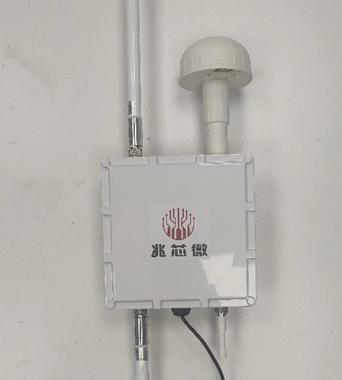
Forest fire prevention system. We developed the LoRa gateway, the gateway relay, and the forest fire temperature sensor. A sensor within line of sight reaches the gateway directly over 5 kilometers, and a remote sensor reaches the gateway through the relay. One gateway with relays monitors a radius of 10 kilometers. The gateway uploads temperature data over 4G, and it switches to the Beidou satellite system where the 4G signal is poor.

Smart water meter. We developed the concentrator and the water meter module on the LLCC68 LoRa chip. The meter module operates up to 6 years on one battery, and the module supports valve control. Through the relay function, one concentrator reads and controls up to 1000 water meter modules. The cloud platform stores the application data and the payment data for the utility company.
JDM Meaning in Electronics Manufacturing
JDM sits between OEM and ODM. The customer holds part of the R&D capability, and the manufacturer's engineers join the development work.
JDM meaning. JDM stands for joint design manufacturing. In electronics manufacturing, both sides share the design work, and the manufacturer also produces the product. The customer keeps the system architecture and the application knowledge. The manufacturer contributes PCB design, DFM, component engineering, and process knowledge. Both sides share the design IP by agreement.
Why early joint development pays off. A design problem found at the FAE stage means a PCB respin and weeks of delay. When the manufacturer's engineers review the schematic and the PCB layout during development, the manufacturing constraints enter the design before the first prototype. The first articles come off the SMT line closer to production intent.
JDM at PCBONLINE. Our engineers join the customer's R&D process from the early stage. We help the customer reduce cost from the PCB design angle, solve technical problems fast, and move the new product to market sooner.
Here's a JDM project with field application testing at PCBONLINE as a showcase for you:
CCD camera for smart traffic. The camera PCBA has entered the final application-scenario test. The camera is mounted at a road crossing, and it records traffic images around the clock for a full week while we log the data. After the test week, our engineers review the logged data with the customer and optimize the software and the hardware design together.


In a JDM project, PCBONLINE works as a design partner and a manufacturer at once. Your team keeps control of the product definition, and our engineers stay inside the review loop until the design freezes.
OEM Vs. ODM Vs. JDM: Side-by-Side Comparison in Electronics Manufacturing
The three electronics manufacturing models are different in design ownership, IP, engineering risk, and speed to market. The table below compares OEM, ODM, and JDM.
|
|
OEM
|
ODM
|
JDM
|
|
Who designs the product
|
The customer
|
The manufacturer
|
Both sides jointly
|
|
Who owns the design IP
|
The customer
|
The manufacturer, or licensed to the customer
|
Shared by agreement
|
|
Who provides the design files
|
The customer sends Gerber, BOM, and test files
|
The manufacturer creates the full file package
|
Both sides create and review the files together
|
|
Engineering risk
|
The customer carries the design risk
|
The manufacturer carries the design risk
|
Shared between both sides
|
|
R&D team required
|
A full hardware R&D team
|
No hardware R&D team
|
A partial R&D team
|
|
Time to market
|
Set by the customer's design cycle
|
Fastest, the product design already exists
|
Faster than solo development
|
|
Best fit
|
OEM terminal companies with complete R&D
|
Solution companies and brands without R&D
|
Companies with partial R&D that want a design partner
|
How to Choose Between OEM, ODM, and JDM for Electronics Manufacturing
Choosing the right electronics manufacturing model depends on your R&D capacity and your schedule. Check below before you send a quotation request.
Choose OEM when your design is complete. Your team owns the schematic, the PCB layout, and the firmware, and you need a manufacturer to execute the files. OEM gives you full control of the design IP and full responsibility for the design risk.
Choose ODM when you have a market but no R&D team. You know the application, the certification requirements, and the price point. An ODM turns the requirement into a finished device, and you brand and sell the device.
Choose JDM when your team covers part of the design. You keep the architecture and the firmware, and the manufacturer's engineers join the schematic review, the PCB layout review, and the DFM work. Joint development from the early stage removes the problems that otherwise surface at the FAE stage.
OEM, ODM, and JDM Electronics Manufacturing Market Analysis
The electronics manufacturing market keeps growing. Market data shows the market growth expectations of OEM, ODM, and JDM in the next five years.
The EMS market keeps expanding. Mordor Intelligence sizes the electronics manufacturing services market at USD 663.34 billion in 2026 and projects USD 909.32 billion by 2031, a 6.51% CAGR. PCB assembly held 43.32% of the 2025 revenue, and box-build assembly and turnkey models post the fastest growth rates in the report.
AI hardware expands ODM orders. Bank of America expects the global server market to reach USD 756.9 billion in 2026, and AI servers account for USD 495.7 billion of that figure, up 104% year over year. By 2030, the server market reaches about USD 1.5 trillion, and AI servers take 83% of the revenue. ODMs already hold about 84% of AI server shipments, because cloud providers order custom designs in volume.
Cloud spending feeds the whole chain. TrendForce reports the top nine cloud service providers raised their 2026 capital spending by about 90% year over year. Every AI server order pulls HDI PCBs, high-speed backplanes, and power modules through the contract manufacturing chain. Edge AI devices and industrial IoT gateways add a second demand stream with smaller volumes and higher mix.
Demand shifts toward ODM and JDM. Brands keep chip design and software in-house and send the manufacturing work to contractors. Companies without R&D teams buy ODM products to enter the market fast. Companies with partial R&D teams sign JDM projects and share the engineering load with the manufacturer. AI hardware raises PCB layer counts and assembly density on all three models, so the manufacturing partner needs HDI fabrication and high-mix assembly capacity in-house.
Order OEM, ODM, and JDM Electronics Manufacturing at PCBONLINE
PCBONLINE provides OEM, ODM, and JDM electronics manufacturing, including R&D, PCB fabrication, component sourcing, PCB assembly, PCBA value-added services, testing, enclosures, and finished device assembly
Founded in 2005, PCBONLINE has two large PCB manufacturing bases in Jiangsu and Jiangxi Provinces and a turnkey PCB assembly factory and a smart OEM center in Shenzhen. We serve AI and IoT, industrial control, automotive electronics, and medical electronics customers from prototypes to volume production.
Turnkey PCB assembly manufacturer with R&D and engineering capabilities for product terminal companies.
PCB manufacturing of FR4 from 1 to 64 layers, HDI 1+N+1 to 4+N+4, metal-core, PI and PET flexible, rigid-flex, and ceramic PCBs.
Component sourcing with alternative part proposals through our Hong Kong procurement team.
SMT assembly with 3D SPI, dual 3D AOI, and 3D X-ray inspection, and a first-article inspection before volume production.
R&D on ESP and STM32 series chips for IoT products, with verified alternatives from our partner chip companies.
Box-build assembly with custom enclosures and wiring harnesses.
IC programming, conformal coating, functional testing, and burn-in testing before shipment.
PCBA manufacturing certified with ISO 9001:2015, ISO 14001:2015, IATF 16949:2016, RoHS, REACH, UL, and IPC-A-610 Class 2/3.
Send your ODM requirements, or Gerber files and BOM to info@pcbonline.com, and our engineering team will reply with a DFM report and a turnkey quotation.
FAQs
Q: What does OEM mean in electronics manufacturing?OEM stands for original equipment manufacturer. In electronics manufacturing, the OEM produces PCBs, PCBAs, and finished devices according to the customer's design files. The customer owns the design IP.
Q: What does ODM mean in electronics manufacturing?ODM stands for original design manufacturer. The ODM designs and manufactures the product, and the customer brands and sells the finished device. The design IP usually stays with the manufacturer or transfers by agreement.
Q: What does JDM mean in electronics manufacturing?JDM stands for joint design manufacturer. The customer and the manufacturer share the design work, and the manufacturer also produces the product. JDM suits companies with partial R&D capacity.
Q: What is the difference between OEM and ODM?In OEM, the customer designs the product, and the manufacturer produces it. In ODM, the manufacturer designs and produces the product, and the customer brands it. The core difference is who owns the design work and the design IP.
Q: Can one manufacturer provide OEM, ODM, and JDM services?Yes, if the manufacturer has both production lines and an R&D team. PCBONLINE has manufactured OEM PCBA since 2005, and our smart OEM center in Shenzhen provides one-stop R&D and ODM manufacturing plus joint development for JDM projects.
PCB assembly at PCBONLINE.pdf


