

PCBONLINE has manufactured PCBs and assembled PCBAs since 2005. Over two decades of production and engineering work, our engineers have gained deep product knowledge across industrial control, automotive electronics, medical devices, and AIoT applications. In 2026, we set up our smart OEM team and center in Shenzhen, and we now provide R&D and ODM manufacturing services for IoT products.
Our ODM work centers on IoT products based on ESP and STM32 series chips. If your company has no R&D capacity, we develop the complete product for you and manufacture it under one roof. If your team covers part of the R&D work, our engineers join your project from the early design stage and take the product into production.
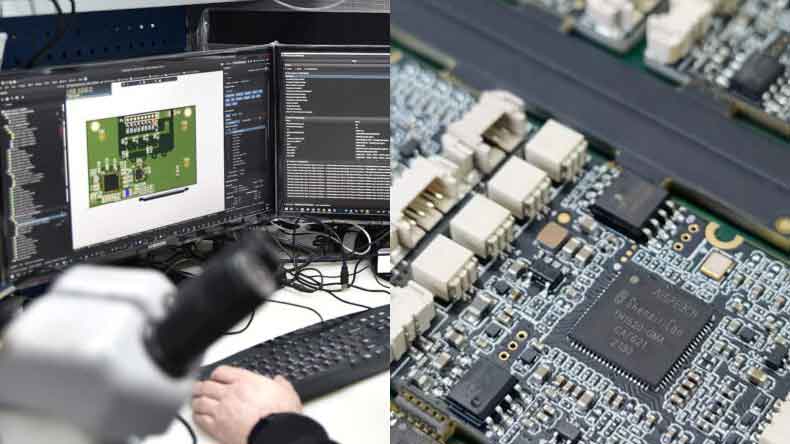
Below are three ODM solutions we developed and put into production. Each one is a proven design. If your requirement is close to one of them, we modify the design to your specifications, and it becomes your finished product.
What ODM Manufacturing Means
ODM stands for original design manufacturing. In an ODM project, the manufacturer designs and produces the product, and the customer sells it under its own brand.
ODM, OEM, and JDM compared. An OEM project starts from your design files. You finish the R&D, and the manufacturer sources components and assembles your PCBA. An ODM project starts earlier, at the product requirement. The manufacturer completes the design work, from schematic and firmware to enclosure and testing, and then manufactures the product. JDM, joint design manufacturing, sits between OEM and ODM, and the customer and the manufacturer develop the product together.
|
|
OEM
|
ODM
|
JDM
|
|
Full name
|
Original Equipment Manufacturing
|
Original Design Manufacturing
|
Joint Design Manufacturing
|
|
Starting point
|
Your complete design files
|
Your product requirement
|
Your product idea or partial design
|
|
Who designs the product
|
You
|
The manufacturer
|
You and the manufacturer together
|
|
Who owns the design
|
You
|
The manufacturer
|
Shared, set by contract
|
|
Best fit
|
Companies with full R&D capacity
|
Companies without R&D capacity
|
Companies with partial R&D capacity
|
At PCBONLINE, all three models end at the same production lines. An OEM order enters at PCB fabrication or PCB assembly. An ODM or JDM project starts with our smart OEM team and ends in mass production.
ODM scope for IoT products. An IoT product combines circuit design, PCB layout, embedded firmware, wireless protocol selection, sensor matching, cloud connection, and enclosure design. An ODM manufacturer covers all of this work in one project, so the customer works with one engineering team from concept to mass production.
Two cooperation models at PCBONLINE. Customers without R&D capacity send us the product requirements, and we complete the full R&D and manufacturing. Customers with partial R&D capacity keep the work their team does well, such as application software or system design, and our engineers join early for hardware, PCB layout, and DFM.
PCBONLINE ODM Manufacturing Service for IoT Products

PCBONLINE is a source electronics manufacturer founded in 2005. Our ODM service grows out of our PCB production and PCB assembly capacity.
Our manufacturing facilities. We own two large PCB manufacturing bases in Jiangsu and Jiangxi Provinces and a turnkey PCB assembly factory in Shenzhen. The Shenzhen factory runs four automatic SMT lines with 3D SPI and 3D AOI, plus X-ray inspection, conformal coating, IC programming, functional testing, burn-in testing, and box-build assembly. Every PCBA we assemble goes through 3D SPI and 3D AOI on our SMT lines, and we perform a first-article inspection before volume production.
Our smart OEM team and center in Shenzhen. The team develops IoT products on ESP and STM32 series chips. The center takes an ODM project from the first schematic to the pilot production run.
Our smart OEM team and center in Shenzhen. We provide DFM review, firmware development, component sourcing, and testing plans for every ODM project. When a design calls for an STM32 series part, we also offer verified alternatives from our partner chip companies.
Our smart OEM team and center in Shenzhen. We cooperate with Wuxi Crystal Source Micro Co., Ltd and China Key System & Integrated Circuit CO., LTD. Their chips replace the STM32 series of ST and other costly parts, and our ODM production uses these partner chips to reduce BOM cost and lead time.
ODM Showcase 1: Civil Air Defense System
Our first ODM solution is a monitoring system for civil air defense shelters. It tracks air quality and structure safety underground, and it controls ventilation from the cloud.
System composition. The system contains our self-developed LoRa gateway, an oxygen sensor, a carbon dioxide sensor, an atmospheric pressure, temperature, and humidity sensor, an inclination sensor, and a fan control terminal.
Data path. Each sensor sends its data to the LoRa gateway. The gateway forwards the data to the cloud over 4G.
Remote fan control. The cloud platform sends commands back down to the fan control terminal. Operators start and stop the ventilation fans remotely, based on the live oxygen and carbon dioxide readings.
Customization for your project. Shelter sizes, sensor counts, and alarm thresholds differ by project. We adjust the sensor set, the firmware logic, and the cloud connection to your requirements, and we manufacture the terminals and gateways in our Shenzhen factory.
ODM Showcase 2: Forest Fire Prevention System
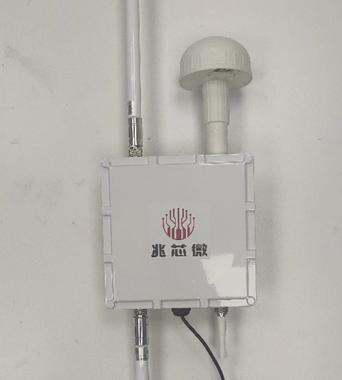
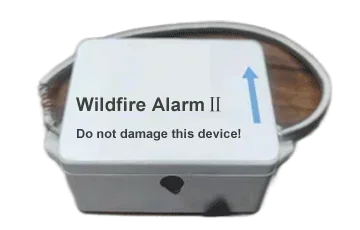
The second ODM solution is a forest fire prevention system for outdoor temperature monitoring. It shares the LoRa wireless base of the air defense system and adds relays for long-distance coverage.
System composition. The system contains our self-developed LoRa gateway, gateway relays, and forest fire prevention temperature sensors.
Ten-kilometer coverage. A sensor close to the gateway sends data directly over LoRa. A sensor far from the gateway sends data through a gateway relay. The maximum visible distance reaches 5 kilometers, and one gateway with relays monitors sensors within a 10-kilometer radius.
Data upload with satellite backup. The gateway sends temperature data to the cloud over 4G. Where the 4G signal is weak, the gateway switches to the Beidou Satellite System, so mountain areas without cell coverage stay connected.
Customization for your project. The terrain of your site determines the sensor density and relay positions. We modify the node hardware, the power supply, and the network plan for your site, and we produce the sensors, relays, and gateways ourselves.
Water meter
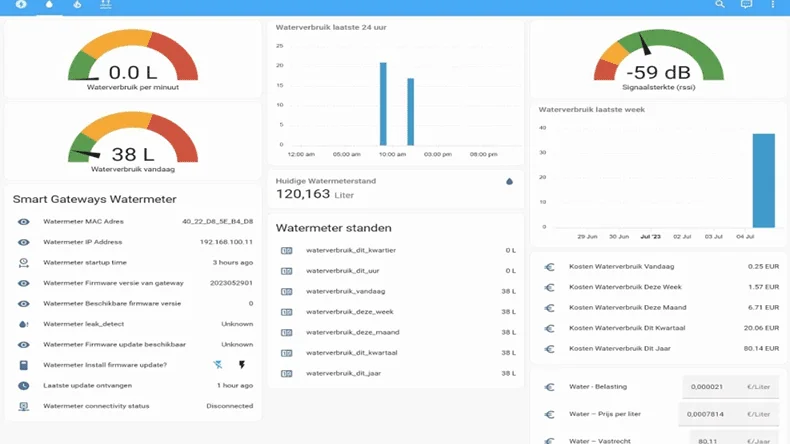
The third ODM solution is a wireless smart water metering system for utility companies and property managers. It combines our self-developed concentrator and water meter module, both designed around the LLCC68 LoRa chip.
Six-year battery life. The water meter module sleeps at microamp level between transmissions. One battery supports up to six years of service without replacement.
Remote valve control. Each meter module carries a valve. The utility company opens and closes the water supply of a single household from the cloud platform.
One concentrator, one thousand meters. The module supports relay forwarding, so one concentrator reads and controls up to 1000 water meter modules. The concentrator reads the whole network on a schedule, reads a single meter on demand, and sends valve commands to any meter.
Meter data in the cloud. Meter reading data, application data, and payment data stay on the cloud platform. Utility companies use this data for billing, leakage analysis, and network maintenance.
Customization for your project. Meter calibers, valve types, and communication bands differ by market. We modify the module and concentrator design for your market and manufacture the meters in volume.
ODM Manufacturing Process for IoT Products at PCBONLINE
An ODM project at PCBONLINE follows a fixed sequence from requirement to mass production. Each stage has a review point, and you approve the output before the next stage starts.
Requirement review. You send us the product requirement: functions, target market, volume estimate, and certification needs. Our engineers turn the requirement into a specification document and a quotation.
Solution design. We select the main chip platform, the wireless protocol, and the sensor set. For IoT products, this stage fixes the ESP or STM32 series platform, or a verified alternative from our partner chip companies.
Schematic and PCB layout. Our engineers draw the schematic and lay out the PCB. We run a DFM review against our production line rules before the files go to fabrication.
Prototype fabrication and assembly. Our PCB manufacturing bases produce the prototype PCBs, and our Shenzhen factory assembles the first articles. We perform a first-article inspection before any further units.
Firmware development and debugging. The firmware team develops the embedded code in parallel with the hardware work. Prototype units go through bring-up, wireless calibration, and sensor matching.
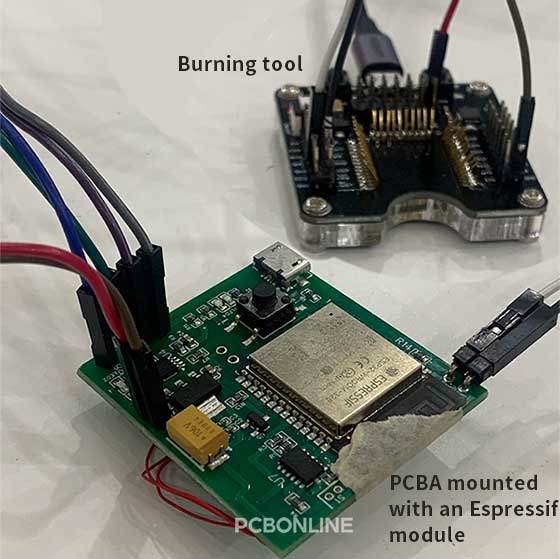
Testing and validation. Each prototype goes through functional testing, and the design goes through reliability checks such as burn-in. For outdoor products like the forest fire prevention sensors, we also verify enclosure sealing and transmission distance in the field.
Pilot run and mass production. A pilot run validates the production record before volume orders. Mass production then runs at our PCB manufacturing bases and our Shenzhen assembly factory, with 3D SPI and 3D AOI on every PCBA.
For customers with partial R&D capacity, the sequence stays the same. Your team owns the stages it covers, and our engineers take the rest.
STM32 Alternative Chips for ODM Manufacturing
IoT products designed around the STM32 series face cost and lead time pressure. We cooperate with two Chinese chip companies, and their chips give our ODM projects a verified second source.
Wuxi Crystal Source Micro Co., Ltd. This company designs, tests, and sells analog and mixed-signal integrated circuits, with over 40,000 square meters of factory area in the National Wuxi High-tech Industrial Development Zone. Three of its products appear often in our ODM designs.
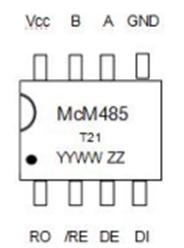
The McM485 is a half-duplex RS-485 transceiver. It transmits at up to 10Mbps, connects up to 256 transceivers on one bus, and protects its pins against ±15 kV contact discharge under IEC 61000-4-2. It replaces the MAX3485, SN75176, and ADM3064E at a better price and lead time.
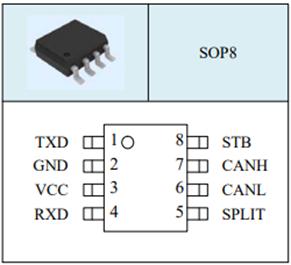
The CSC1040 is a CAN transceiver that complies with ISO 11898 and runs at up to 1Mbaud. It connects at least 110 nodes, wakes from standby over the bus, and protects its bus pins against short circuits and thermal stress.
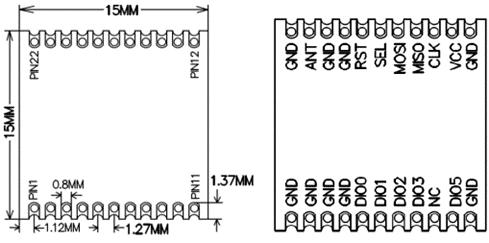
The MCM78SPI is a LoRa wireless module for IoT products. It works from 1.8V to 3.7V in the 410 to 525MHz band, reaches -136dBm receiving sensitivity, and covers 5 kilometers at 250bps in open areas. Its receiving current stays at or below 13mA, and its sleep current stays at or below 1 µA.
China Key System & Integrated Circuit CO., LTD. The MCU business unit of CKS develops 32-bit MCUs on ARM Cortex-M0, Cortex-M3, and Cortex-M4 cores. Some models passed the AEC-Q100 automotive qualification.
The CKS32F103xC series runs a Cortex-M3 core at 144MHz, with up to 512KB of flash and 96KB of SRAM. Its peripherals include three 12-bit ADCs, general-purpose and PWM timers, I2C, SPI, I2S, SDIO, USART, USB, and CAN.
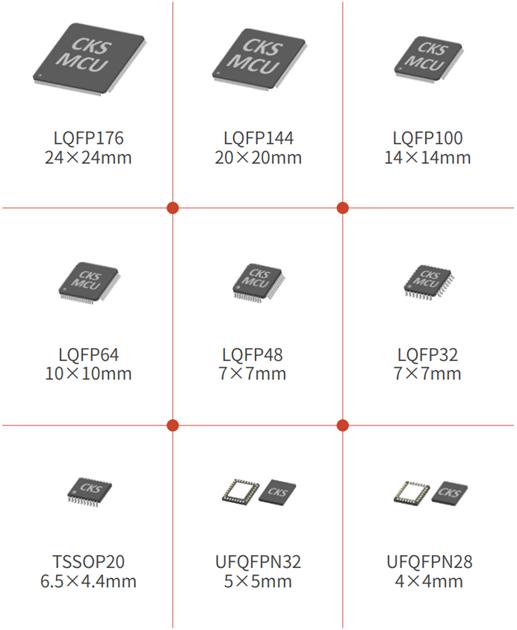
The CKS32F407xG and CKS32F417xG series run a Cortex-M4 core at 168MHz, with a floating-point unit, DSP instructions, and a memory protection unit. Both series replace the STM32 series of ST directly, without changing the existing firmware.
Partner chips in ODM production. Our engineers verify each partner chip against the original part before it enters an ODM design. Once verified, the chip enters our sourcing system, and our Shenzhen factory assembles it like any other part.
Order ODM Original Design Manufacturing at PCBONLINE
PCBONLINE provides one-stop ODM services for IoT products based on ESP or STM, including R&D, PCB fabrication, component sourcing, PCB assembly, PCBA value-added, testing, enclosures, and finished device assembly.
Founded in 2005, PCBONLINE has two large PCB manufacturing bases in Jiangsu and Jiangxi Provinces and a turnkey PCB assembly factory and a smart OEM center in Shenzhen. We serve AI and IoT, industrial control, automotive electronics, and medical electronics customers from prototypes to volume production.
Turnkey PCB assembly manufacturer with R&D and engineering capabilities for product terminal companies.
PCB manufacturing of FR4 from 1 to 64 layers, HDI 1+N+1 to 4+N+4, metal-core, PI and PET flexible, rigid-flex, and ceramic PCBs.
Component sourcing with alternative part proposals through our Hong Kong procurement team.
SMT assembly with 3D SPI, dual 3D AOI, and 3D X-ray inspection, and a first-article inspection before volume production.
Box-build assembly with custom enclosures and wiring harnesses.
IC programming, conformal coating, functional testing, and burn-in testing before shipment.
PCBA manufacturing certified with ISO 9001:2015, ISO 14001:2015, IATF 16949:2016, RoHS, REACH, UL, and IPC-A-610 Class 2/3.
Send your ODM requirements or Gerber files and BOM to info@pcbonline.com, and our engineering team will reply with a DFM report and a turnkey quotation.
FAQs
Q: What is ODM manufacturing?ODM, original design manufacturing, is a cooperation model where the manufacturer designs and produces a product, and the customer sells it under its own brand. The customer brings the product requirements, and the manufacturer completes the R&D and production.
Q: What is the difference between ODM and OEM?In an OEM project, the customer owns the design, and the manufacturer only produces it. In an ODM project, the manufacturer owns both the design and the production. ODM fits companies without R&D capacity, and OEM fits companies with complete design files.
Q: Can PCBONLINE develop an IoT product for a company without an R&D team?Yes. Our smart OEM team in Shenzhen completes the schematic, PCB layout, firmware, and structure design from your product requirements. You approve each design milestone, and we manufacture the product at our PCB manufacturing bases and our Shenzhen assembly factory.
Q: Which chips does PCBONLINE use for IoT ODM products?We develop on ESP and STM32 series chips. For cost or lead time reasons, we also use verified alternatives from our partners, such as the CKS32F103 and CKS32F407 series from China Key System & Integrated Circuit, which replace the STM32 series of ST without firmware changes.
Q: Can PCBONLINE modify one of the three ODM solutions for my project?Yes. The civil air defense system, the forest fire prevention system, and the smart water meter are finished designs. We adjust the sensor set, firmware logic, wireless band, and enclosure to your requirements, and the modified design becomes your product.
PCB assembly at PCBONLINE.pdf


