

Ceramic printed circuit boards (PCBs) are used for high-power, high-temperature, and high-frequency electronic applications. Among all ceramic materials available in the PCB industry, alumina (Al₂O₃) is widely used and the most cost-effective option. Although Al₂O₃ does not deliver the exceptional thermal or RF performance of premium ceramic substrates such as aluminum nitride (AlN) or silicon nitride (Si₃N₄), alumina ceramic PCBs offer a balance of performance, manufacturability, and price.
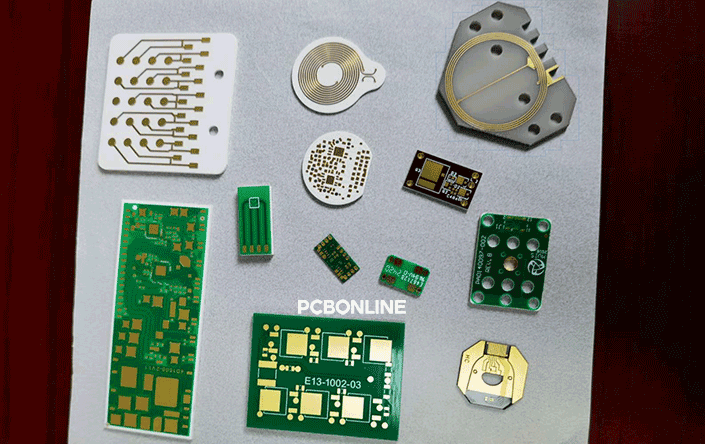
PCBONLINE provides one-stop high-quality ceramic PCB manufacturing. This article provides a comprehensive look at the characteristics and manufacturing methods of Al₂O₃ ceramic PCBs.
What Is an Alumina (Al₂O₃) Ceramic PCB?
An alumina ceramic PCB is a printed circuit board built on a substrate made of aluminum oxide ceramic. Alumina is a stable, electrically insulating, mechanically strong, and thermally conductive material commonly used in the electronic packaging industry.
Alumina substrates used in PCB manufacturing have a purity of 96% or 99% Al₂O₃, with 96% alumina being the standard choice for cost-sensitive applications.
Al₂O₃ ceramic PCBs have these advantages:
- Mature global supply chain
- Low material and processing cost
- Stable chemical and mechanical properties
- Good dielectric insulation and moderate thermal conductivity
- Compatibility with DPC, DBC, and thick-film circuit processes
Alumina: the Most Affordable Ceramic PCB Material
When comparing ceramic substrates, alumina almost always comes out as the most economical option. The low cost of Al₂O₃ ceramic PCBs comes from several factors:
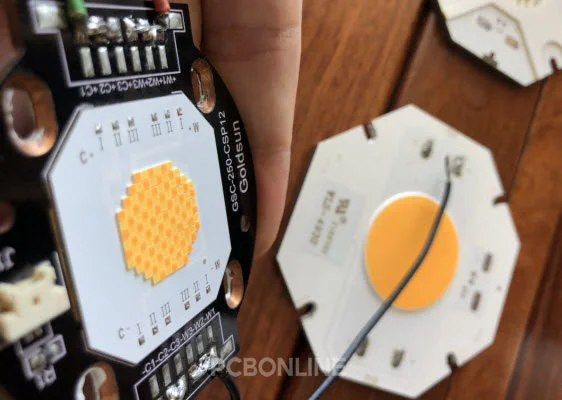
Al₂O₃ ceramic PCB used for high-thermal LED light
- Abundant availability: Aluminum oxide is one of the most common ceramic oxides found in nature. The raw material cost is significantly lower than that of aluminum nitride or advanced multi-layer ceramic systems like LTCC.
- Lower sintering temperature: Alumina is sintered at approximately 1600°C, which is lower than many high-performance ceramics. This reduces energy costs and manufacturing complexity.
- Mature manufacturing ecosystem: Alumina ceramic substrates have been used in electronics for decades. Global manufacturers have optimized processes, volume production capabilities, and yield rates, making Al₂O₃ highly cost-competitive.
- Compatibility with multiple PCB technologies: Al₂O₃ works well with mainstream ceramic PCB processes, such as DPC (direct plated copper), DBC (direct bonded copper), and thick-film metallization.
Al₂O₃ ceramic PCBs are versatile and reduce prototype and mass-production costs. As a result, alumina is generally the lowest-cost ceramic PCB option, often 30–70% cheaper than aluminum nitride.
Thermal Performance of Al₂O₃ Ceramic PCBs
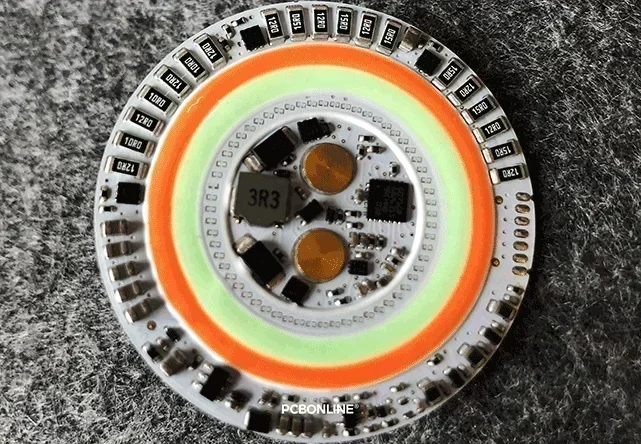
Although alumina's thermal conductivity is modest compared with other ceramic materials, it is still far above that of FR4 and standard metal-core PCBs.
Below is the thermal conductivity of Al₂O₃ and other ceramic substrates.
- Alumina (Al₂O₃): 20W/m·K to 30W/m·K
- Aluminum nitride (AlN): 150W/m·K to 170W/m·K
- Silicon nitride (Si₃N₄): 70W/m·K to 90W/m·K
Al₂O₃ ceramic PCBs' thermal performance is enough for these applications:
- Middle-power LED modules
- Industrial control circuits
- Sensor modules
- Low to medium-power modules
- Automotive auxiliary electronics
- General-purpose ceramic packaging
However, for applications requiring extremely high heat dissipation or very high reliability under thermal cycling, Al₂O₃ ceramic PCBs are not enough to meet their requirements:
- High-power laser drivers
- EV inverters
- High-power IGBT modules
- 5G power amplifiers
- High-performance radar systems
For these applications, AlN or Si₃N₄ ceramic PCBs are appropriate options.
RF and Electrical Performance of Al₂O₃ Ceramic PCBs
Al₂O₃ ceramic PCBs offer moderate RF performance. Their electrical characteristics include:
- Dielectric constant (Dk): ~9.5
- Dissipation factor (Df): moderate
- High insulation resistance
- Stable dielectric behavior across temperature
For the good RF performances, Al₂O₃ ceramic PCBs are used in microwave circuits up to the mid-GHz range, sensor and transducer electronics, and high-voltage isolation designs.
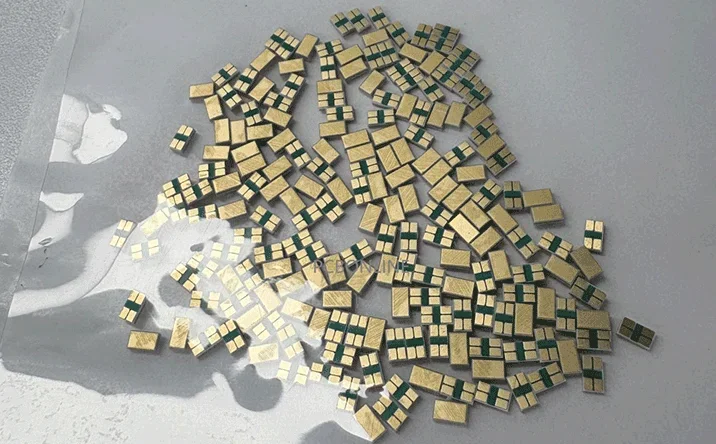
The RF performance of Al₂O₃ is moderate (Dk 9.5), but the other ceramic PCBs offer better performance:
- AlN, Dk 8.5
- LTCC, Dk 5.5-7.8
- Rogers/PTFE, Dk 2.2-3.5
For this reason, Alumina is not a high-end RF material. Although alumina performs better than FR4 in RF scenarios, an Al₂O₃ ceramic PCB still cannot compete with LTCC or PTFE ceramic PCBs when dealing with millimeter-wave communications, high-frequency antennas, satellite RF modules, and ultra-low-loss microwave components.
Mechanical and Other Advantages of Al₂O₃ Ceramic PCB
Al₂O₃ ceramic PCBs offer excellent mechanical strength and chemical stability, so they can be used in harsh environments.
- High hardness and wear resistance
- Excellent corrosion resistance
- High compressive strength
- Stable performance from −55°C to +150°C
- Excellent electrical isolation even at high voltages
Other advantages of Al₂O₃ ceramic PCBs are:
- Cost-effectiveness: For OEMs and ODMs targeting mass production, alumina provides a balanced combination of price and performance.
- Excellent insulation performance: With high dielectric strength, alumina ensures long-term reliability in high-voltage circuits.
- Compatibility with multiple metallization processes: This gives designers more flexibility in cost and performance.
However, limitations of Al₂O₃ ceramic PCBs are also quite a few:
- Alumina cannot meet the stringent thermal requirements of high-power modules.
- Its dielectric constant and loss are higher than dedicated RF substrates.
- Like most ceramics, alumina lacks ductility and may crack under high mechanical stress or improper handling.
- Unlike LTCC, alumina PCBs remain single-layer or two-layer due to manufacturing constraints.
Manufacturing Methods for Al₂O₃ Ceramic PCB
Al₂O₃ ceramic PCB can be fabricated using DPC, DBC, or thick-film technologies.
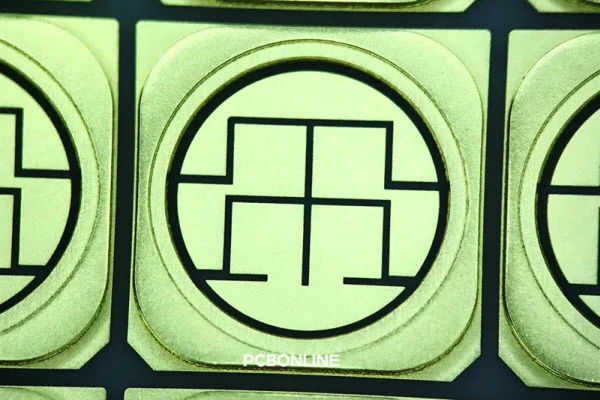
DPC (direct plated copper)
DPC uses a laser to activate the alumina surface, followed by electroless copper deposition and electrolytic copper thickening. Applications of DPC alumina PCBs include sensors, RF components, and precision electronics. They offer the advantages of:
- Fine lines and high precision
- Smooth copper traces
- Suitable for RF circuits
- Good for thin copper applications
DBC (direct bonded copper)
DBC bonds a thick copper foil directly to alumina using an oxygen-rich process. Applications of DBC alumina PCBs include power modules, high-current drivers, and IGBT substrates. They offer the advantages of:
- Thick copper (up to 300μm–500μm)
- Extremely strong copper adhesion
- Excellent current-carrying capability
Thick-film ceramic PCB
This traditional method prints conductive and resistive pastes (silver, gold, or copper) onto alumina using screen printing. Applications of thick-film alumina PCBs include LED substrates, sensor housings, and heater circuits. They offer the advantages of:
- Lowest cost among all ceramic PCB methods
- Simple process
- Large volumes supported
Applications of Al₂O₃ Ceramic PCBs
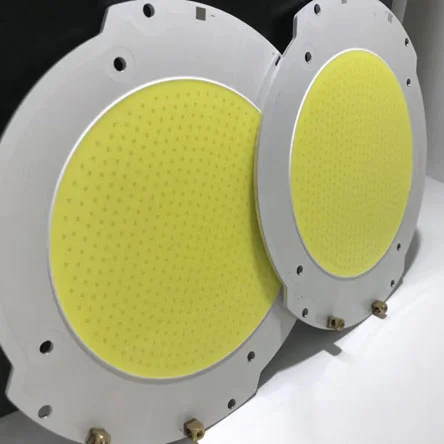
Because of affordability and balanced properties, Al₂O₃ ceramic PCBs are widely used in:
- LED lighting modules, especially COB (Chip-on-Board) applications.
- Power electronics, such as rectifiers, power drivers, power transistors, and low to medium-power IGBT modules.
- Automotive electronics, such as sensor modules, ignition systems, and control units exposed to heat.
- Medical devices, such as laser drivers, implantable sensors, and high-precision instruments.
- Industrial automation, such as high-temperature control boards, heating elements, and piezoelectric driver circuits.
- RF and microwave modules with moderate-frequency designs.
PCBONLINE: High-Quality Ceramic PCB Board Manufacturer
PCBONLINE is a one-stop ceramic PCB board manufacturer founded in 2005, providing turnkey AlN PCB and alumina PCB made by any of the above manufacturing methods. Besides, ceramic IGBT modules, ceramic COB LED modules, ceramic LED plates, etc, can also be provided by PCBONLINE.
PCBONLINE manufactures, assembles, and tests ceramic PCBs as a source factory manufacturer under one roof, from prototypes to bulky production.
PCBONLINE can manufacture ceramic PCBs to be HDI, high-frequency, multilayer, and double-sided.
Provides one-on-one free and professional DFM (design for manufacturing) for ceramic PCB boards before and during prototyping/sampling to ensure the success of your project and seamless mass production.
PCBONLINE has powerful ceramic PCB manufacturing capabilities. The copper layer thickness of ceramic PCBs is arbitrarily customized from 1μm to 1mm.
High-quality ceramic PCB boards with no oxide layer on the PCB surface have better welding performance and high-temperature resistance.
For ceramic PCB manufacturing and assembly orders at $5,000 and above, we offer free complete ceramic PCBA samples and functional tests. If you feel interested in ceramic PCB boards from PCBONLINE, feel free to send your inquiry by email at info@pcbonline.com.
Conclusion
Al₂O₃ ceramic PCBs are cost-effective with moderate thermal dissipation and RF performances. To ensure the success of your PCB/PCBA projects, work with the turnkey ceramic PCB manufacturer PCBONLINE.
PCB assembly at PCBONLINE.pdf
PCB fabrication at PCBONLINE.pdf


