

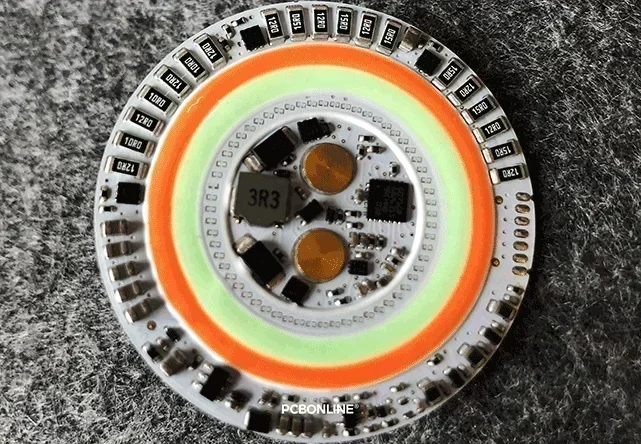
Printed circuit board (PCB) manufacturing and assembly are necessary and critical in electronics manufacturing, which involves schematics, components, PCB design, hardware design, software design, PCBA manufacturing, the enclosure, cables, connectors, box-build assembly, and testing.
The process of PCB manufacturing and assembly is non-linear and custom. For example, flexible PCBs require attaching coverlay and stiffeners, while HDI PCBs require sequential laser lamination, and their PCB fabrication and assembly lines and equipment are different. However, a single/double-layer FR4 PCB manufacturing process is almost standard, including:
- Manufacturing - cut lamination, circuit layer etching, AOI (automatic optical inspection), lamination, drilling, plating, solder mask, surface finish, and in-circuit testing or flying probe test.
- SMT assembly - solder paste printing, solder paste inspection, component pick-and-place, AOI, reflow soldering, and the second AOI.
- THT assembly - inserting the component lead through the PCB hole, wave soldering, and trimming the lead.
In this article:
FAQ 1. Top PCB board manufacturers FAQ 2. PCB Manufacturing Process FAQ 3. What is a PCB brd file? FAQ 4. What is a PCB prototype? FAQ 5. How do I choose the best PCB assembly service for my project?FAQ 1. Top PCB Board Manufacturers
Top PCB manufacturers are those leading PCB factories whose target clients are also the world-class companies, like Apple, Tesla, Microsoft, etc. The top PCB manufacturers include Chin Poon Industrial, TTM Technologies, Tripod Technology, Shennan Circuits, Meiko Electronics, Unimicron Technology, NOK, Nippon Mektron, Kinwong Electronic, etc.
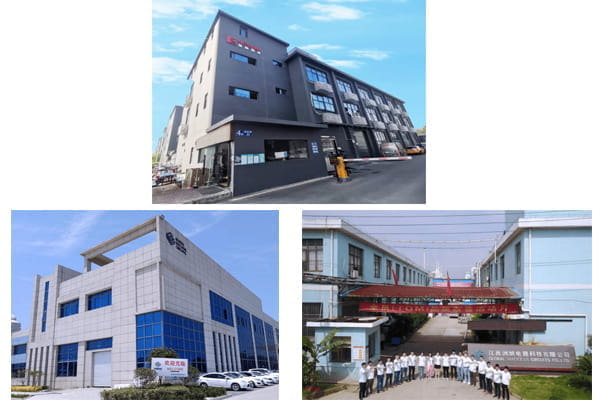
However, these top PCB manufacturers usually serve only long-term clients for bulky orders and are equipped with specialized PCB fabrication/assembly lines only for them. If you are a middle or small-scale company wanting turnkey OEM PCB assembly from prototypes to massive production, you can work with high-quality and one-stop PCB manufacturers like PCBONLINE.
FAQ 2. PCB Manufacturing Process
1. Preparation & inner layers
- Cutting: We start by sizing the base material (laminate) and cleaning it.
- Inner circuitry: We apply a light-sensitive film and use UV light to "print" the circuit design.
- Etching: A Na2CO3 chemical bath washes away the film, and an etchant eats the unwanted copper. We then strip the remaining film with NaOH to reveal the inner copper paths.
- AOI: An automated camera scans for any tiny errors before the layers are sealed.
2. Lamination
- Stack-up: We stack the inner layers with Prepreg and copper foil.
- Pressing: This stack is put into a heavy press under high heat and pressure until it fuses into one solid board.
3. Drilling & plating
- Drilling: We drill holes (vias) to connect the different layers. This is done with high-speed mechanical bits or lasers for precision.
- Copper plating: Since the holes are just plastic inside, we use a chemical bath to coat them with a thin layer of copper, making them conductive.
4. Outer layer
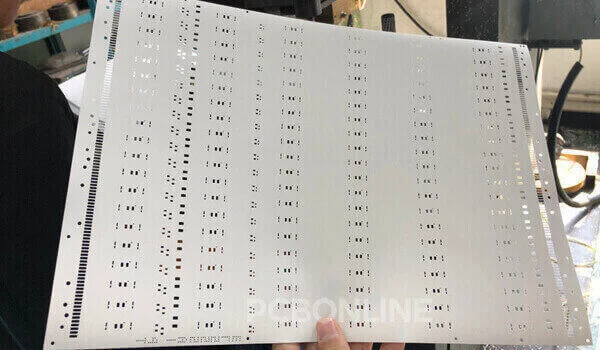
- Outer circuits: We repeat the UV printing process on the outside of the board.
- Secondary plating: We plate extra copper onto the circuits and add a layer of tin. The tin acts as a shield, protecting the "good" copper while we etch away the last bits of unwanted copper.
5. Protection & identity
- Solder mask: This is the iconic green (or blue/red) coating. It protects the circuits from oxidation and prevents accidental shorts during soldering.
Legend (silkscreen): We print the text, logos, and component codes onto the PCB.
6. Finishing
- Surface finish: We coat the exposed copper pads in gold (ENIG), silver, or tin to keep them from rusting before components are soldered on.
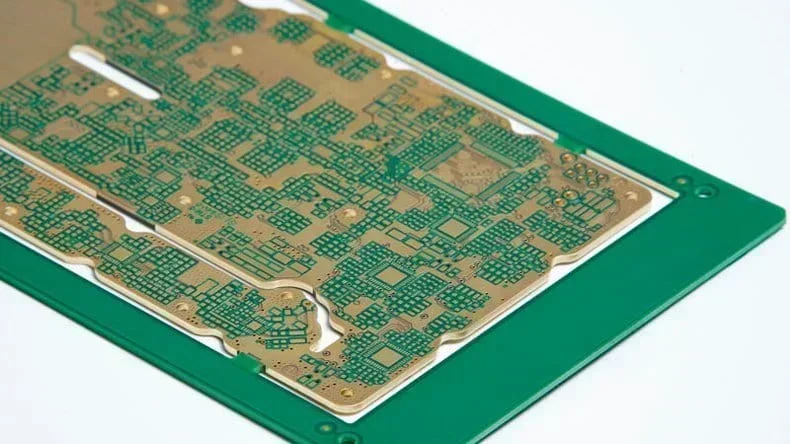
- Profiling: We use a router, V-cut, or laser to cut the individual boards out of the large production panel.
7. Testing & quality control
- Electrical test: We use a bed of nails or a flying probe to shoot electricity through every circuit to ensure there are no breaks or shorts.
- Final inspection: We double-check the dimensions, hole sizes, and heat resistance to ensure the board is perfect.
FAQ 3. What is A PCB brd File?
A .brd file is an editable computer-aided design (CAD) file containing the physical layout of the PCB. When you finish your design in the .brd file, you export a set of Gerbers to send to the factory.
In other words, a brd file is the source of the Gerber file, and it is your property. While Gerber is the final file you send to the PCB manufacturer as printing instructions. It contains component placement, copper routing, PCB dimensions, vias, and layer stack-up.
FAQ 4. What is A PCB Prototype?
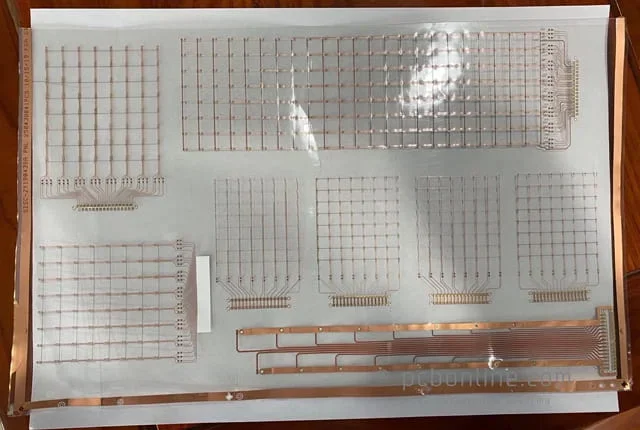
A PCB prototype is the trial run of a PCB fabrication project to test and validate the design and manufacturing process. A prototype order evolves 1 to 5 pieces of PCBs.
Different standard PCB prototypes can be grouped on the same production panel to reduce their cost. However, at the advanced PCB manufacturer PCBONLINE, a PCB prototype is produced and assembled on the sample lines for bulk production to ensure quality consistency.
The prototype cost is higher, which also covers the fees of the jig and flying probe test. When the project moves forward into the bulky production stage, the unit price goes down.
FAQ 5. How do I choose the best PCB assembly service for my project?
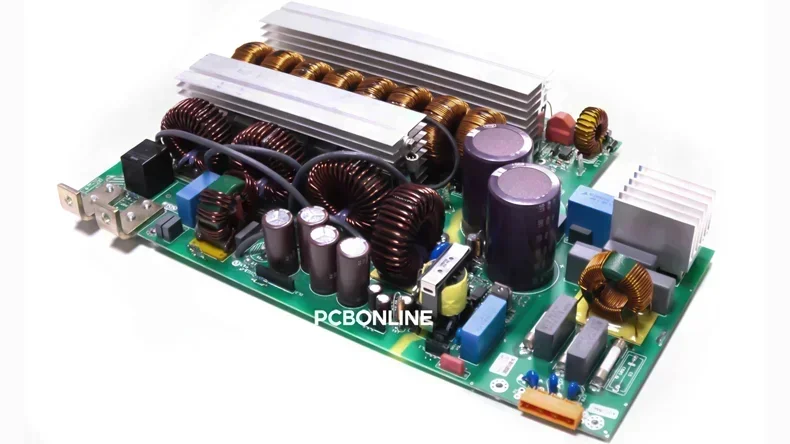
Choosing the best PCB assembly service is choosing the right service provider suitable for your project.
If your project is a complex circuit, choosing an advanced PCB manufacturer like PCBONLINE is the best. PCBONLINE provides full turnkey services from prototypes to mass production, meeting your manufacturing demands. We cover PCB manufacturing and assembly, the enclosure, cables, connectors, box-build assembly, testing, and we have the R&D capabilities and can take part in your design.
If your PCB project is simple, standard, and only in a very small quantity, your best PCB assembly service provider can be PCBWay or JLC PCB. The reason is that, besides PCB pooling, they group different prototype orders on the same assembly line, so their efficiency is very high, and the cost is low. You can upload your Gerber and BOM to their online calculation platform and place the order online directly.
You may wonder why complex PCB manufacturing and assembly can't be ordered directly online in the above way. The reason is simple. Due to their circuit complexity, uncertainty of component availability in your BOM, and DFM considerations, it is still impossible to order them directly online. We still have to rely on engineers' human engineering work and the supply chain's experience.
One-Stop PCB Manufacturer PCBONLINE
You can work with the advanced PCB source factory manufacturer PCBONLINE for PCB manufacturing and assembly under one roof. In PCB project manufacturing capabilities, we have:
- Two large advanced PCB manufacturing bases for advanced PCBs,
- One turnkey PCB assembly factory for PCB assembly,
- Stable material supply chains and strategic cooperation with the mainstream MCU manufacturers for all electronic components,
- Long-term cooperation with the top 3 mold and enclosure manufacturers in China for jigs/textures, molds, SMT stencils, and plastic/metal enclosures.
- An R&D team and professional CAM engineers for project development and DFM (design for manufacturing).
PCBONLINE offers free DFM before and during PCB prototyping/sampling to ensure the success of batch production, including checks of Gerber and BOM, jig/fixture/PCB stencil design, manufacturing process, and testing, and solving all issues throughout the project to ensure seamless manufacturing.
PCBONLINE can provide or assist R&D for your PCB project, including hardware and software R&D, schematics, PCB layout, and enclosure design.
Completing PCB projects under one roof, including PCB manufacturing, component sourcing, PCB assembly, PCBA value-added and testing/inspections in the post-assembly stage, and box-build assembly.
High-quality PCB/PCBA manufacturing meeting your application demands, including ISO 9001:2015, ISO 14001:2015, IATF 16949:2016, RoHS, REACH, UL, IPC-A-610 Class 2/3, and IPC-A-610 Class 2/3.
No matter what quantity you want, we always prioritize quality and provide service and support that meet and exceed your expectations.
If you need higher-performance PCBs - automotive and medical-grade, PCBONLINE can also meet your project requirements! Don't hesitate to contact info@pcbonline.com.
Conclusion
PCB manufacturing and assembly are custom, and the process depends on the circuit complexity and manufacturing demands. If you need PCBs, choose PCBONLINE as your one-stop manufacturer with free DFM and the best, most reliable quality.
PCB fabrication at PCBONLINE.pdf
PCB assembly at PCBONLINE.pdf


