
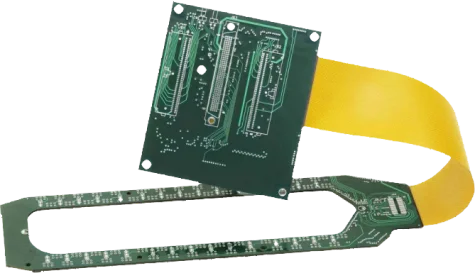
Advantages of the PCB Manufacturer PCBONLINE
 MATERIALS
 PCBONLINE uses materials of good heat/sweat/chemical resistance for rigid-flex PCB fabrication. We use RA copper in the flexible layers of the rigid-flex PCB.
 EQUIPMENT
 Rigid-flex PCB fabrication requires both flex and rigid PCB fabrication lines and laser-cut equipment. PCBONLINE has complete equipment specialized for rigid-flex PCB fabrication.
 TEAM
TEAM The professionals from PCBONLINE can optimize rigid-flex PCB design to be the most economical to lower your project fabrication price without quality sacrifice.
 QUALITY
 PCBONLINE sets up strict quality control and ISO management system. Our rigid-flex PCB and PCBA manufacturing are ISO, IATF, RoHS, UL, and IPC certified.
 CUSTOM
 PCBONLINE provides custom rigid-flex PCB services, including PCB design, PCB fabrication, PCB assembly, electronic components, and value-added services.
 TRANSPORT
 PCBONLINE provides various rigid-flex PCB shipping methods, including air, sea, and rail shipping by DHL, FedEx, and UPS. You can choose your freight forwarder.
Rigid-Flex PCB Fabrication at PCBONLINE
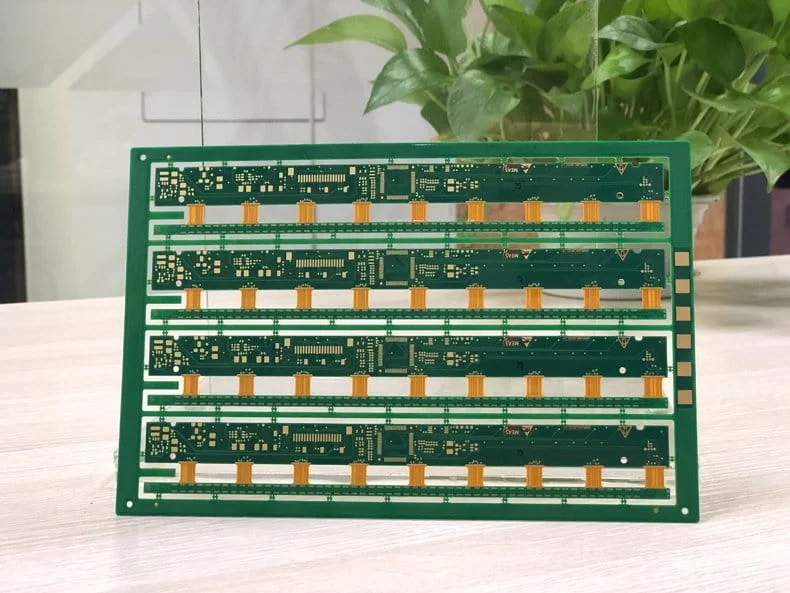
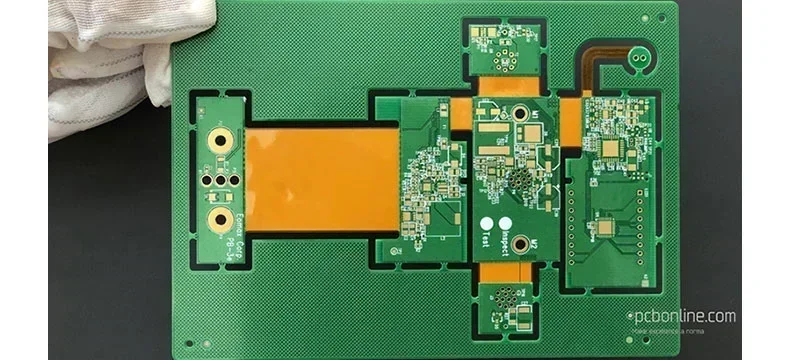
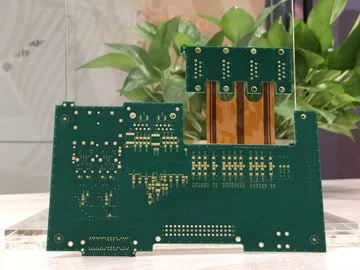
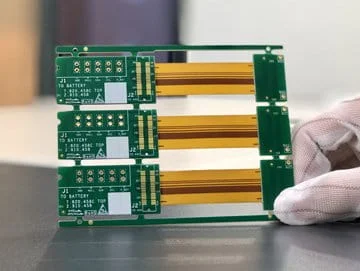
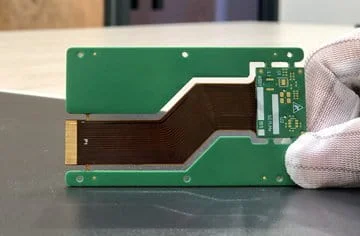
PCBONLINE fabricates rigid-flex PCBs with PI flex layers and FR4 rigid layers for medical devices, automotive electronics, aerospace systems, industrial controls, and wearables. In these products, the PCB folds into a compact enclosure and flexes through repeated motion over the device's lifetime.
Our flex sections use PI film rather than PET. PET cannot survive FR4 lamination temperatures and lacks the bending endurance these applications require. We use rolled annealed (RA) copper in the flex sections for dynamic bending and high-temperature elongation (HTE) copper for high-performance rigid-flex PCBs. Interconnects between layers use drilled through-holes and microvias (blind, buried, staggered, or stacked).
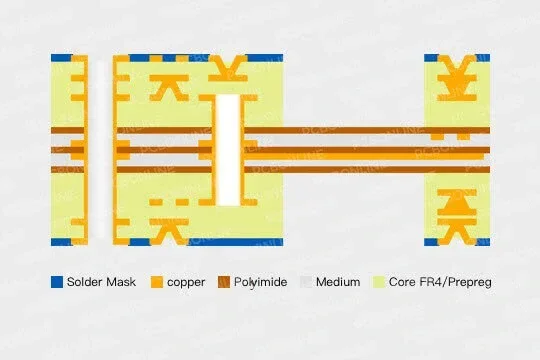
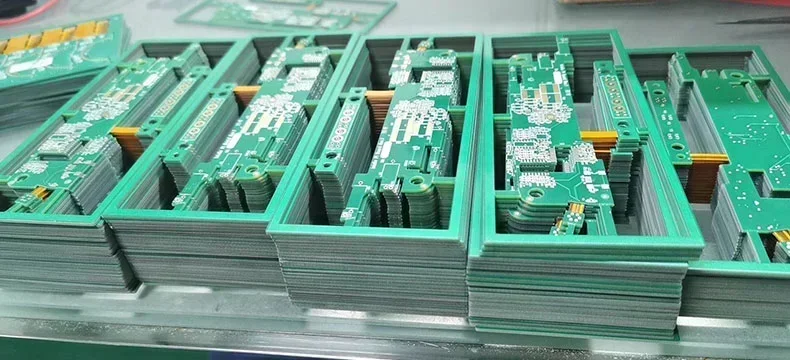
During the rigid-flex PCB manufacturing process, first we fabricate the flexible PI circuit as the inner layer, then we laminate the FR4 outer layers onto it from the top and bottom. We then laser-cut from the outermost rigid layer down to the inner flex layer, removing only the copperless FR4 in the unused regions. The exposed flexible layer becomes the bending zone of the finished PCB.
We produce three rigid-flex constructions:
Symmetrical rigid-flex PCB: inward symmetrical flex layers, from 3R+1F to 24R+6FAsymmetrical rigid-flex PCB: outward asymmetrical flex layers, from 2R+1F to 24R+6FHDI multilayer rigid-flex PCB: blind/buried microvias in the rigid sections, stack-ups up to 4+N+4
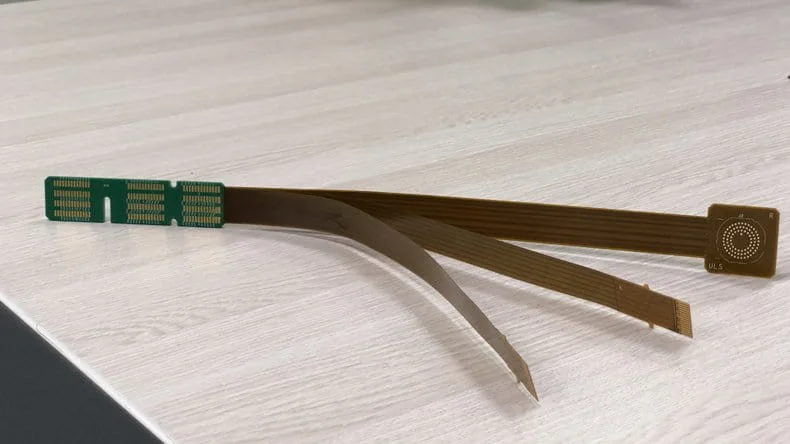
We provide one-stop rigid-flex PCB manufacturing from prototypes to bulk production, with component sourcing, PCB assembly (min. pitch 0.35mm), PCBA testing, and value-added services. If your application does not require a true rigid-flex PCB, we also fabricate flex PCBs with stiffeners (FR4, polyimide, or stainless steel) as a lower-cost alternative.
PCBONLINE's Advantages in Rigid-flex PCB
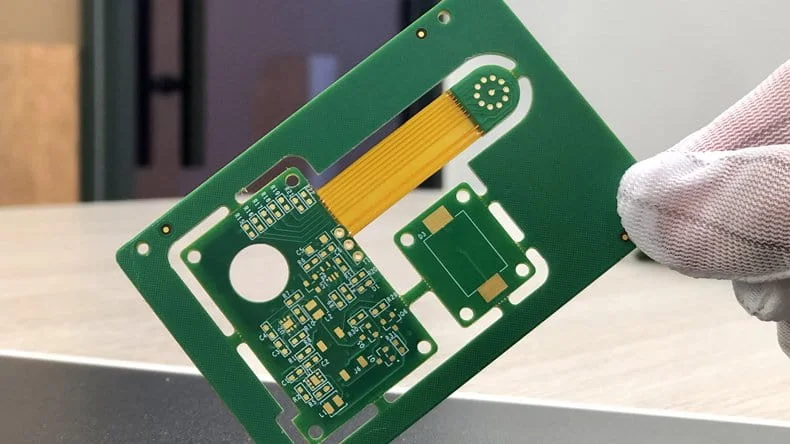
Both flex and rigid lines in one factory. Rigid-flex PCB fabrication requires the manufacturer to build flexible circuits, rigid FR4 PCBs, and laser routing in one place. Our Jiangsu manufacturing base operates dedicated flexible PCB lines, FR4 rigid PCB lines, and laser routing equipment, so every rigid-flex process is completed in-house with nothing outsourced.
In-house ENIG and hard gold plating. Gold surface finishes are a common outsourcing point in the industry. Our Jiangsu base has its own immersion gold and electroplated gold lines, with licensed gold salt procurement, use, and storage, plus wastewater treatment equipment. Gold fingers, gold pads, and contact areas are plated in-house under full process control.
Top-tier bending performance and HDI capability. Our flex sections are rated for dynamic bending at a minimum radius of 5mm with more than 1,000,000 bend cycles, built with RA copper and PI under IPC-2223-compliant constructions. Tighter bend radii are available for ultra-thin flex cores. Our HDI rigid-flex PCB capability reaches 4+N+4, which covers the densest stack-ups in high-reliability products.
Source factory pricing. PCBONLINE is a rigid-flex PCB source factory, not a trade company or agent. Buying from the source factory removes the broker margin from your project cost.
Engineering support that reduces cost. Our engineers review your stack-up and design before production and adjust the layer count and materials so the PCB meets the spec at the lowest workable cost.
Cost of Rigid Flex PCB
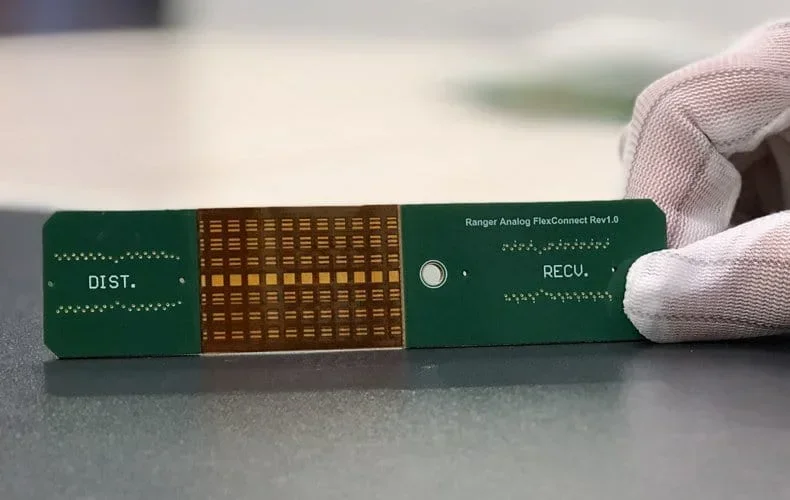
Our engineering team quotes after reviewing your PCB design files Gerber and other requirements. The price is determined by:
Laminate price (PI film and FCCL)Total layer count and the rigid/flex layer ratioCircuit complexity (trace width/space, via types, HDI structures)Surface finishes (hard gold plating and ENIG add cost)Lead time (expedited fabrication increases price)
Rigid-flex PCBs are more expensive than flexible PCBs and FR4 PCBs because they combine both manufacturing processes. Usually, rigid-flex PCBs cost 2 to 3 times more than flexible PCBs and 8 to 10 times more than FR4 PCBs.
On 4-layer PCBs with a total area of 0.1 square meters, PCBONLINE charges about $900 for rigid-flex, $450 for flexible, and $100 for FR4.
As a source factory fabricating both the flex and rigid sections and plating gold finishes in-house, PCBONLINE avoids the markups that traders and agents add, plus the quality risks and communication costs of multi-vendor coordination.
For a rigid-flex PCB quote, send your Gerber files to
Rigid flex PCB Manufacturing Capabilities
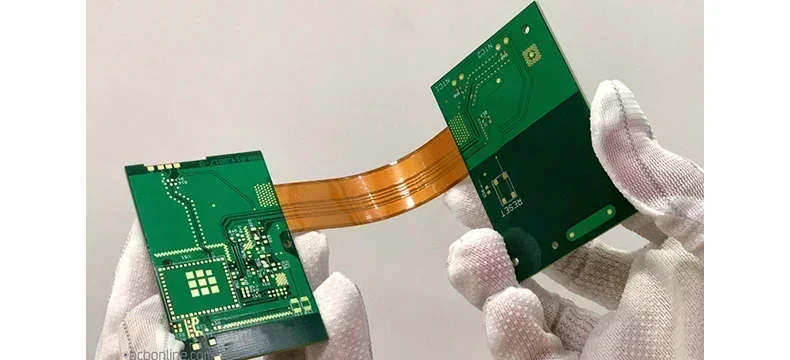
Applications of rigid-flex PCB:
thermal imagers, automotive sensors and lights, radar imaging systems, controller connection boardscommunications systems, smartphone/industrial cameras, lithium battery coversmedical devices like analytical instruments, capsule gastroscopes, health sensorsdigital security controls, computer & smartphone screens, smart-wear devices, AI devices, headsets
GET A FREE QUOTE
PCB and PCBA Certifications







Contact Our Expert Team Now

Learn about our products


Get customized services

 Phone
Phone WhatsApp
 Email
Email
Offer Electronics Manufacturing All-in-One
PCBONLINE® is a registered trademark or service mark of pcb online limited or its affiliates.
Copyright © 2005-2026 Pcb Online Limited. All rights reserved


