

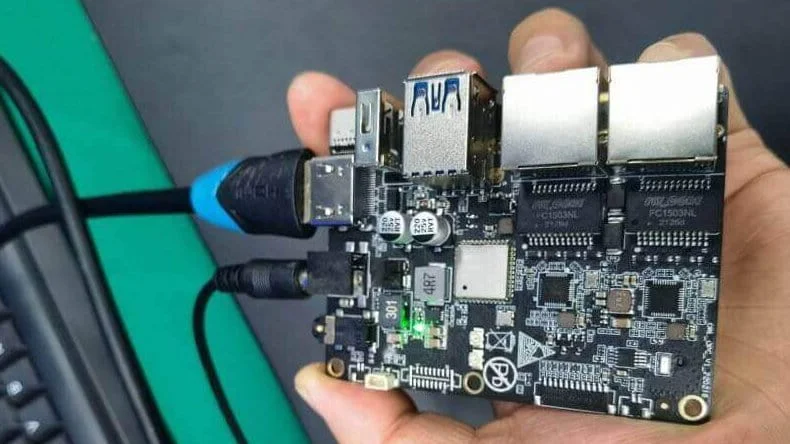
In the global electronics industry, driven by environmental needs and international regulations, the shift from tin-lead (SnPb) solder to lead-free solder is the standard. However, working with lead-free solder requires a fundamental shift in thermal management, material storage, and manufacturing discipline.
PCBONLINE is a one-stop PCBA (printed circuit board assembly) manufacturer using lead-free solder and automated SMT and THT assembly. Explore how we work with lead-free solder, from the chemical composition of the alloys to our rigorous "clean-line" standards.
Understanding Lead-Free Solder Ingredients and Characteristics
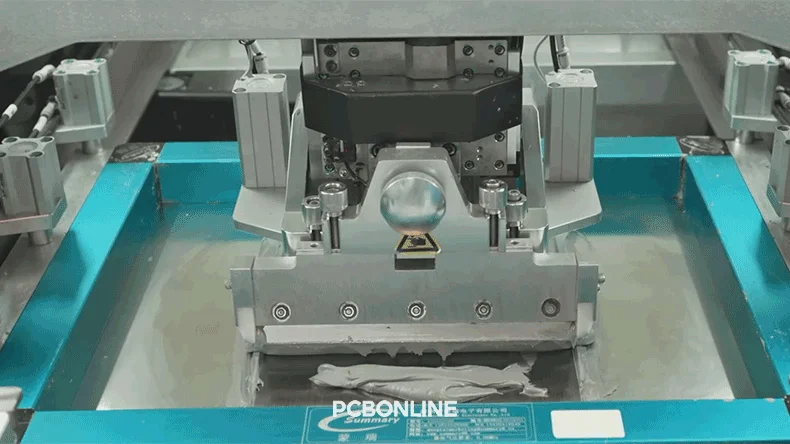
While lead once lowered melting points and improved wetting, it has a toxic impact on the environment and human health. Lead-free solder, using safer elements, replaces tin-lead solder in modern PCB assembly.
Common lead-free solder models and ingredients
The most widely used lead-free solder in the PCBA industry is the SAC family of alloys.
SAC is an acronym for its primary components: Stannum (Tin), Argentum (Silver), and Cuprum (Copper). The SAC lead-free solder family includes:
- SAC305: It consists of 96.5% Tin, 3.0% Silver, and 0.5% Copper. It offers the best balance of mechanical strength, fatigue resistance, and cost.
- SAC405: Containing 4.0% Silver. It provides even higher reliability for automotive or aerospace applications, but has a higher price due to the increased silver content.
- Sn99.3Cu0.7: Often used in wave soldering for THT assembly. This tin-copper lead-free solder is more affordable because it has no silver, though it requires more careful temperature control.
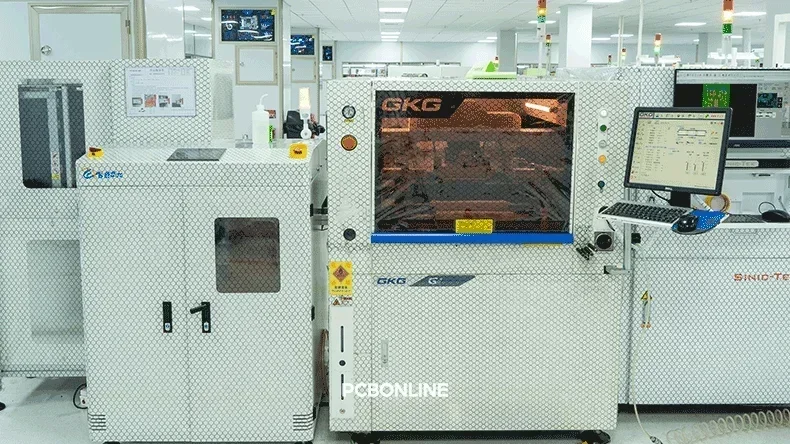
Melting points: leaded vs lead-free solder
The most significant difference between leaded and lead-free solder is the melting point.
Leaded solder (Sn63Pb37): Melts at 183°C.
Lead-free solder (SAC305): Melts at 217°C.
Due to the 34°C melting point increase, in a reflow oven, lead-free solder brings more thermal stress on the PCB laminate and the delicate internal structures of microchips. So lead-free soldering has higher temperature control requirements during reflow and wave soldering.
Storage, management, and pre-assembly handling
Solder paste consists of microscopic solder balls in a flux medium. If handled incorrectly, the flux can chemically degrade, or the solder balls can oxidize, leading to poor solder joints.
Lead-free solder paste must be kept in a climate-controlled environment, between 2°C and 10°C. The traditional way is to store lead-free solder paste in a specialized refrigerator.
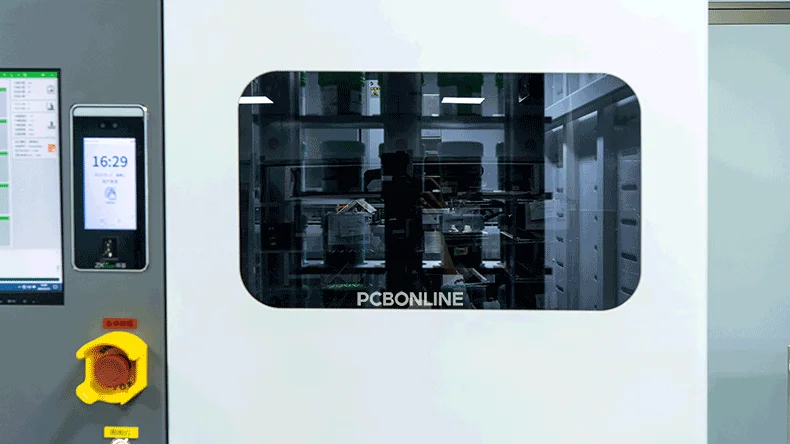
At PCBONLINE, we store and manage lead-free solder paste in a smart solder paste cabinet. Our automation system ensures:
- Strict FIFO (First-In, First-Out): The cabinet automatically releases the oldest paste first to prevent expired material from reaching the line.
- Environmental monitoring: Constant logging of temperature and humidity.
- Traceability: Every jar of paste is scanned, linking it to a specific production batch.
Before using the lead-free solder paste, we warm up the paste to the room temperature at 25°C naturally over 3 to 4 hours.
If a jar is opened but not fully used, we carefully reseal and stabilize the paste before returning to cold storage.
Why Use Lead-Free Solder? CE and RoHS Requirements
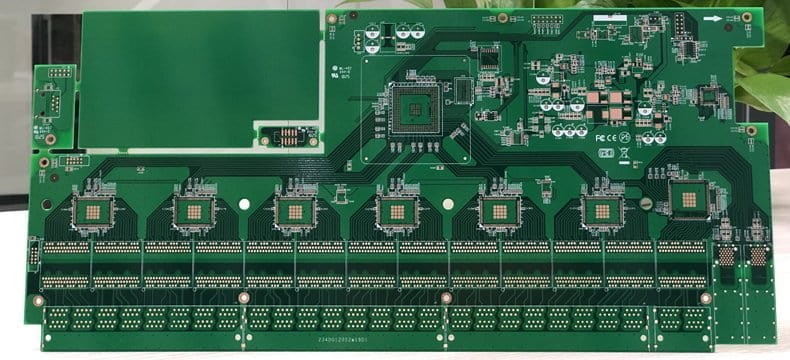
Why do we work with lead-free solder? The primary reasons are the RoHS (Restriction of Hazardous Substances) directive and the CE (Conformité Européenne) marking.
- RoHS compliance: To sell electronics in Europe, California, China, and most other major markets, your product must contain less than 0.1% (1,000 ppm) lead by weight. The RoHS directive applies to the PCB material, the components, and the solder.
- The CE mark: For electronic products, the CE mark is a declaration that the product meets all EU safety and environmental standards. Since RoHS is a sister directive to the CE requirements, you cannot legally apply a CE mark to a product that contains leaded solder, unless there is a specific medical or military exemption.
By using only lead-free components and solder, turnkey PCB assembly manufacturers like PCBONLINE ensure their customers' products are future-proofed and ready for global export.
Why do we insist on the "zero-lead" policy in our PCB assembly lines?
Once a reflow oven, wave solder machine, or pick-and-place nozzle is used with leaded solder, it is polluted. Microscopic lead dust can settle on the loaders carrying the PCBs or the contact surfaces of the test machines.
By refusing lead-containing PCBs entirely, we eliminate the human error of a leaded component being accidentally placed on a RoHS PCB.
Besides, when we provide a RoHS Declaration of Conformity (DoC), it is backed by a factory environment that is physically incapable of introducing lead.
Lead-Free Reflow Profile
When we work with lead-free solder, lead-free reflow soldering is inevitable.
A reflow profile is the graph of time versus temperature that a PCB experiences inside the reflow oven.
Because lead-free solder has a higher melting point and lower wetting speed, the lead-free reflow profile must be much more precise.
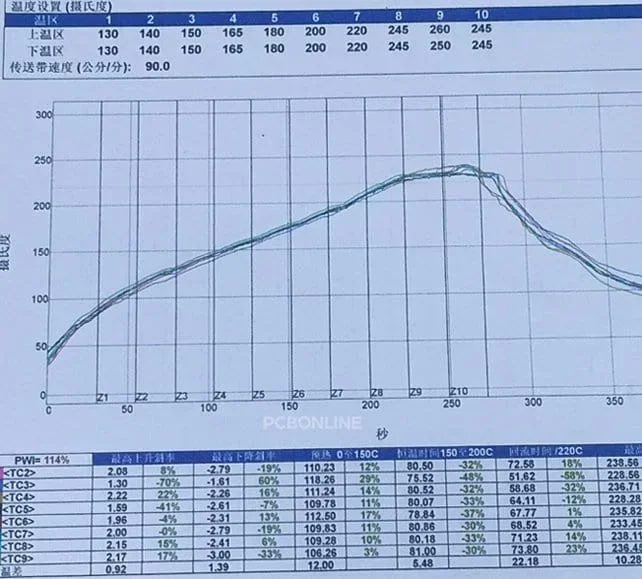
A. Preheat zone
The temperature is raised from ambient to roughly 150°C. The goal is to evaporate solvents in the paste and prevent thermal shock to the ceramic components.
B. Soak zone (The flux activation)
The PCB is held between 150°C and 200°C for 60 to 120 seconds. This allows the flux to clean the metal surfaces, removing oxides so the solder can bond properly.
In lead-free reflow soldering, the soak zone is critical because SAC305 flux is more aggressive and needs time to work before the tin melts.
C. Reflow (liquidus) zone
The reflow zone is where the lead-free solder, PCB surface finish, and copper pad react and form a permanent joint. The reflow temperature must cross the 217°C liquidus point.
To ensure every solder joint on a dense PCB is fully melted, the reflow oven usually hits a peak of 240℃ to 250℃.
In the reflow zone, the PCB should stay above 217°C for 45 to 90 seconds. Too short, cold solder joints; too long, damaged components or the PCB.
D. Cooling zone
The PCB must be cooled at a controlled rate, usually 3–4°C per second. If cooled too slowly, the solder grains grow too large, making the joint brittle. If cooled too fast, the components may crack.
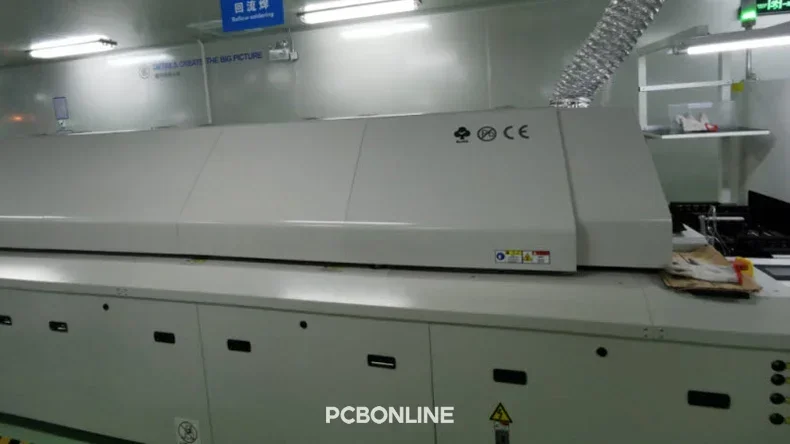
High-Tg PCB Laminates Match Lead-Free Solder
Because lead-free reflow reaches 250℃, standard FR4 PCB materials struggle, and we use high-Tg FR4 PCB instead.
Tg, or glass transition temperature (Tg), is the temperature at which the PCB laminate begins to soften.
For lead-free assembly, we recommend High-Tg materials (Tg 170°C or higher).
High-Tg PCB materials have lower Z-axis expansion, meaning they don't swell as much when heated. This prevents the copper vias from cracking under the intense heat of the lead-free oven.
Work with the Turnkey Lead-Free PCB Assembly Manufacturer PCBONLINE
PCBONLINE provides turnkey lead-free PCB manufacturing and assembly to the IPC-A-610 Class 3 standards. You can order RoHS PCB/PCBA/box-builds from PCBONLINE with cost-effectiveness, including flexible PCBs, rigid-flex PCBs, RF microwave PCBs, etc. From PCB copper-clad laminates, silkscreen, components, solder flux, the SMT and THT assembly lines, to post-assembly testers and finished device assembly and PCBA shipping, our PCBA solution is fully lead-free/halogen-free and compliant with RoHS and CE.
Founded in 1999, PCBONLINE has two large advanced PCB manufacturing bases, one EMS PCB assembly factory, stable supply chains, and an R&D team.
PCBONLINE manufactures all types of lead-free PCBs meeting your custom demand, including high-frequency PCBs, aluminum PCBs, HDI PCBs, copper-based PCBs, ceramic PCBs, FR4 PCBs, and flexible LED PCBs.
We offer turnkey PCB assembly services, from which you can get RoHS-certified final products with the RoHS certification report.
PCBONLINE offers one-on-one engineering support and free design for manufacturing (DFM) and will solve all technical issues to ensure the smooth and successful production, ready for bulk manufacturing.
As a source factory manufacturer, the RoHS PCBs and PCBAs from PCBONLINE are cost-effective with a 98% in-time delivery rate.
High-quality LED light PCB manufacturing certified with ISO 9001:2015, ISO 14001:2915, IATF 16949:2016, RoHS, REACH, UL, and IPC-A-600 Class 2/3.
To get a quote for one-stop lead-free PCBA manufacturing, please contact info@pcbonline.com. No matter what quantity of PCBs you want, PCBONLINE can work for you with high quality and reliability.
Conclusion
Working with lead-free solder requires higher temperatures, better material management, and a commitment to cleanliness. When you work with a PCBA manufacturer like PCBONLINE, you are getting a guaranteed, RoHS-compliant ecosystem. To ensure the success of your lead-free PCB project, get one-stop PCBA manufacturing services from the turnkey PCB assembly manufacturer PCBONLINE.


