

"What should I look for when selecting an electronics manufacturer?" You may ask yourself this question. As an OEM (original equipment manufacturer) electronics contract manufacturer for mid and high-end applications such as industrial controls, AI server, AI glasses, etc, our answer to this question is that: the capability, the quality, DFM (design for manufacturing) service, and most importantly, it depends on your project.
In this article:
Look for OEM Turnkey Capability When Selecting an Electronics Manufacturer Look for Quality When Selecting an Electronics Manufacturer: Certifications and Tests Look for Whether an Electronics Manufacturer Provides DFM service Most Importantly, Is Your Project Bulk Production or Only Prototype, Complex or Simple DIY? Select PCBONLINE as Your OEM Electronics Contract Manufacturer Electronics Manufacturer Comparison Electronics Contract Manufacturing Market AnalysisLook for OEM Turnkey Capability When Selecting an Electronics Manufacturer
The first thing you must evaluate is the manufacturer's turnkey capability. Turnkey manufacturing means the factory handles the entire production process from start to finish. You hand over your design files, and they hand back a fully packaged, ready-to-sell product. This capability is absolutely crucial for a smooth production cycle.
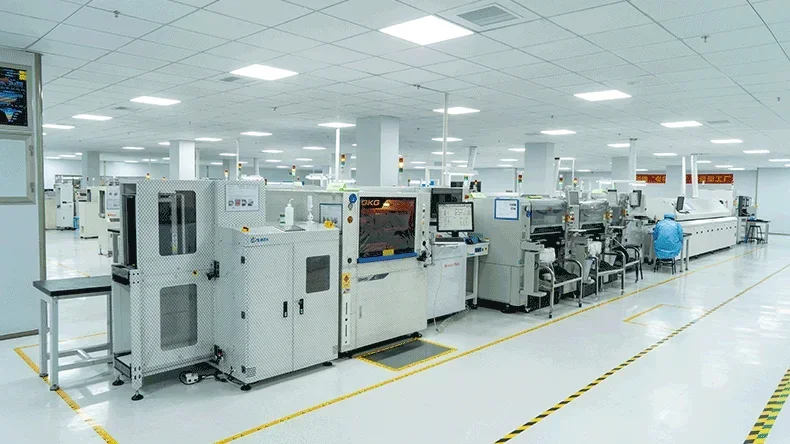
A true OEM turnkey PCB manufacturer will offer several integrated services under one roof. First, they provide component sourcing. Navigating the global electronic supply chain is difficult. A capable manufacturer has a vast network of authorized distributors. They can source hard-to-find chips and negotiate the best prices for your Bill of Materials (BOM).
Next, they must handle the bare printed circuit board (PCB) fabrication. After the boards are made, the process moves to PCB assembly (PCBA). This involves using Surface-Mount Technology (SMT) and Through-Hole Technology (THT) to solder the components onto the board.
Finally, turnkey capability includes box-build assembly. This means the manufacturer will install the assembled PCB into its plastic or metal enclosure. They will handle the cable routing, mechanical fastening, firmware programming, and even the final retail packaging.
Why does this matter? If you use separate suppliers for fabrication, sourcing, and assembly, you will face logistical nightmares. If a board fails, the assembly house will blame the fabricator, and the fabricator will blame the assembly house. A one-stop turnkey manufacturer eliminates this "blame game." You get a single point of accountability, faster lead times, and lower overall shipping costs.
Look for Quality When Selecting an Electronics Manufacturer: Certifications and Tests
Quality is the lifeblood of any electronic device. When your product is deployed in the field, a single failed solder joint can ruin your brand's reputation. Therefore, you must look for rigorous quality management certifications and advanced testing capabilities.
Start by verifying their industry certifications. ISO9001:2015 is the fundamental baseline; it proves the factory has a consistent quality management system.
If you are developing automotive electronics, you must look for IATF 16949:2016 certification.
For environmental safety and global market access, the manufacturer must comply with REACH and RoHS standards, ensuring no hazardous substances like lead are used improperly.
Additionally, UL certification guarantees that the products meet strict fire and electrical safety requirements.
The actual soldering and assembly should strictly follow the IPC-A-610 Class 2 or Class 3 standards, which dictate the acceptance criteria for high-reliability electronics.
Beyond paper certifications, look ats the actual testing equipment on the factory floor. Quality control must happen at every step.

- Solder paste inspection (SPI): This 3D scanning machine ensures that the exact right volume of solder paste is printed onto the bare board before any components are placed.
- Dual Automated optical inspection (AOI): Before and after reflow soldering, high-resolution cameras scan the PCBA board after the reflow oven to catch missing components, misalignments, or solder bridges.
- X-ray inspection: This is mandatory if your design uses Ball Grid Array (BGA) or QFN chips. Because the solder joints are hidden beneath the chip, only an X-ray can verify that the connections are solid and free of internal voids.
- Functional testing and burn-in aging: A premium manufacturer will power on your board, load the IC programming, and simulate real-world operating conditions. Burn-in aging involves running the device under controlled heat and stress to catch early component failures before the product ever reaches your end customer.
Look for Whether an Electronics Manufacturer Provides DFM service
DFM stands for Design for Manufacturing. Many hardware engineers design brilliant schematics on their computers. However, a design that looks perfect on a screen might be incredibly difficult, expensive, or even impossible to manufacture in the real world. This is why you must find an electronics manufacturer that provides DFM services.
A professional manufacturer will review your Gerber files and BOM before production begins. This free DFM check is a game-changer. Their engineers will look for trace widths that are too thin, drill holes that are too close to the board edge, or copper layers that lack proper thermal relief.
They will also perform DFA (Design for Assembly) and DFT (Design for Test) checks. DFA ensures that the physical components will not collide with one another during the high-speed pick-and-place process. It also ensures that components are oriented correctly for the reflow soldering oven. DFT ensures that your board has accessible test points so the factory can easily verify the electrical performance of the finished circuit.
Catching a design flaw before manufacturing costs absolutely nothing. Catching a design flaw after 10,000 boards have been printed is a costly disaster. A manufacturer that offers proactive DFM, DFA, and DFT support acts as an extension of your own engineering team. They optimize your design to ensure high yields, lower costs, and flawless manufacturing.
Most Importantly, Is Your Project Bulk Production or Only Prototype, Complex or Simple DIY?
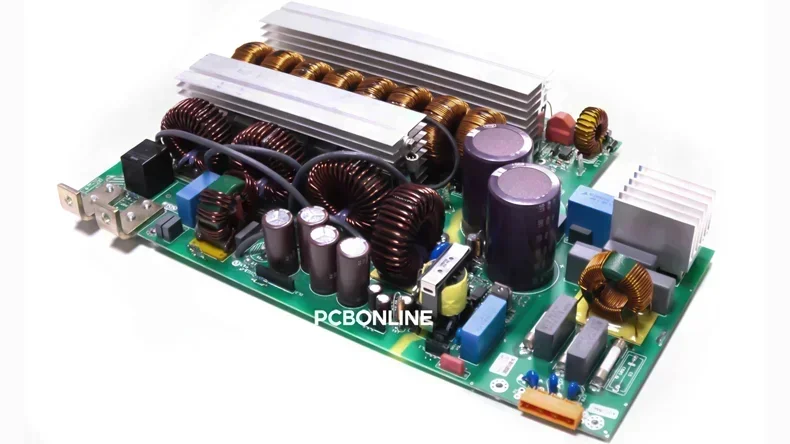
Your specific project requirements will ultimately dictate which manufacturer is the best fit. You must ask yourself: Is this a simple DIY hobby project, or a highly complex industrial inverter PCBA product? Are you building a prototype, or are you ready for massive bulk production?
Scalability is a massive factor. Many large Tier-1 mega-factories simply will not accept your order unless you are spending millions of dollars. Conversely, small prototype shops might do a great job on your 5-piece test run, but they lack the automated SMT lines to handle a 50,000-piece bulk order. You want an electronics manufacturer that can seamlessly scale with you. Look for a partner that has no Minimum Order Quantity (MOQ) limit. They should be just as dedicated to your early-stage R&D prototype as they are to your mass market launch.
Complexity is the other major factor. If you are building a basic consumer toy, almost any factory can handle it. But what if you are building an advanced AI server? That requires massive, thick multilayer boards (up to 64 layers) with High-Density Interconnects (HDI) and thousands of connection points. What if you are building wearable AI glasses? That requires ultra-thin rigid-flex PCBs and microscopic 01005 surface-mount components.
Before signing a contract, verify the manufacturer's technical limits. Ask them about their minimum trace width and spacing, their laser blind hole aperture capabilities, and their experience with advanced materials like ceramics or polyimide. You must match their technical capability directly to your project's complexity.

Select PCBONLINE as Your OEM Electronics Contract Manufacturer
If you are looking for an OEM partner that checks all of these boxes, select PCBONLINE as your electronics contract manufacturer. Founded in 2005, we have spent decades perfecting our craft. We operate two advanced PCB manufacturing bases in Jiangsu and Jiangxi, alongside a state-of-the-art turnkey PCB assembly factory in Shenzhen.
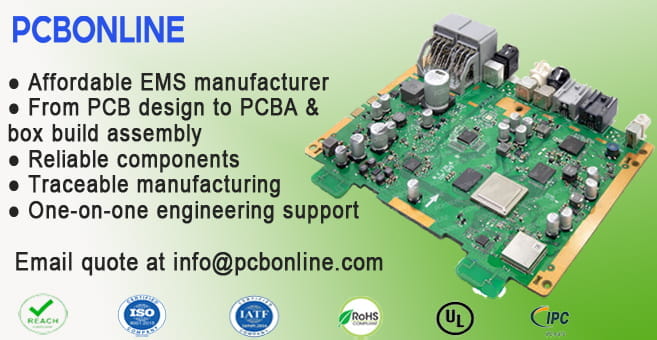
We specialize in mid to high-end applications, making us the perfect partner for aerospace, defense, industrial automation, medical devices, and AI hardware.
We can manufacture PCBs up to 64 layers. We routinely handle complex HDI designs, rigid-flex structures, metal-core aluminum boards, and high-frequency Teflon materials.
When it comes to assembly, our high-speed YAMAHA SMT lines can accurately place tiny 01005 components, fine-pitch ICs, and massive BGA chips.
We offer complete one-stop turnkey services, meaning we handle your PCB fabrication, BOM sourcing, PCBA, IC programming, testing, and final box-build enclosure assembly.
Quality is guaranteed. We are certified with ISO9001:2015, IATF 16949:2016, REACH, RoHS, and UL. Every board we assemble adheres strictly to IPC-A-610 Class 2 or Class 3 standards.
When you work with PCBONLINE, you receive one-on-one professional engineering support. We provide DFM, DFA, and DFT checks before you ever spend a dime.
We have no minimum order limits, and we can even provide free complete PCBA samples for batch orders exceeding $5,000. We are built to scale your innovation from concept to reality. Please feel free to get a quote from email info@pcbonline.com.
Electronics Manufacturer Comparison
To help clarify your options, here is a quick comparison of the different types of manufacturers you will encounter in the electronics industry:
|
Manufacturer type
|
Turnkey capability
|
Engineering &DFM support
|
Project fit
|
Scalability
|
|
Full turnkey OEM (e.g., PCBONLINE)
|
Yes (fabrication, sourcing, assembly, box-build)
|
Comprehensive (free DFM, DFA, DFT, 1-on-1 support)
|
Complex, high-end applications, medical, AI, automotive
|
High (from 1-piece prototype to massive bulk production)
|
|
Fab-only manufacturer
|
No (supplies bare boards only)
|
Basic (only checks fabrication limits)
|
Simple DIY, hobbyists, bare board supply
|
Varies
|
|
Assembly-only shop
|
No (you must supply the boards and components)
|
Minimal (relies entirely on your files)
|
Kitted assemblies, local small-scale builds
|
Usually limited to low/mid-volume
|
|
Tier-1 global megafactories
|
Yes (full scale end-to-end)
|
Yes (often comes with high engineering fees)
|
Global consumer tech giants (millions of units)
|
Extremely high (often rejects small startups and prototypes)
|
Electronics Contract Manufacturing Market Analysis
The global electronics contract manufacturing (ECM) market is currently experiencing unprecedented growth. According to the 2025 market analysis, the industry was valued at approximately USD 708.4 billion. It is projected to reach an astounding USD 1,962.0 billion by 2035, growing at a very strong compound annual growth rate (CAGR) of 9.8%.

What is driving this massive expansion? The rapid proliferation of advanced technology is the primary fuel. The boom in artificial intelligence hardware, electric vehicles, 5G telecom infrastructure, and smart IoT devices has created an incredible demand for high-reliability manufacturing. Electronic devices are becoming smaller, smarter, and much more complex.
Because the capital expenditure to build an in-house SMT factory is so high, Original Equipment Manufacturers (OEMs) are increasingly outsourcing to specialized contract manufacturers. By partnering with an ECM, brands can focus entirely on software development, product design, and marketing, while leaving the heavy lifting of production to the experts.
The Asia-Pacific region dominates this landscape, holding nearly half of the global revenue share. This is driven by massive, highly efficient manufacturing hubs that offer both incredible cost advantages and unmatched engineering talent.
Within the services segment, printed circuit board assembly (PCBA) remains the absolute core of the industry, holding the largest market share. However, we are also seeing rapid growth in electromechanical assembly and full turnkey box-build services. Today's hardware developers want a single purchase order that covers the bare board, the components, the cables, the enclosure, and the final testing. By selecting a highly capable, quality-focused, and scalable turnkey partner, you secure your place in this rapidly growing, technology-driven future.
Conclusion
Electronic contract manufacturer selection needs to look for the manufacturer's capability, quality, engineering support, and, most importantly, look back at your project itself. You ned to select an electronics manufacturer fitting your project. If you look for OEM electronics manufacturing for your business project, from R&D and prototyping to bulk production, or if your project is complex, work with the turnkey electronics manufacturer PCBONLINE.
PCB assembly at PCBONLINE.pdf


