

Every PCBA quote has two kinds of costs. The first kind is visible: component prices, PCB fabrication, assembly, and testing. The second kind is hidden inside the design itself, and it shows up later as rework, redesign, and field failures. A recent IoT project at PCBONLINE shows how we reduced both kinds for one customer.
The customer sent us a complete design for a shared e-scooter mainboard and asked for volume production. Two things made the difference in this project. Our supply chain price on the Quectel communication module cut the material cost by 15%. And our DFM review caught two design problems before production. Either problem alone would have forced a redesign after the batch started, a 100% rework loss on the first run.
This article walks through the project, the cost reduction, and the two DFM findings, all from our engineering and factory work.
Content in this article:
Part 1: The IoT PCBA Project: A Shared E-Scooter Mainboard Part 2: 15% PCBA Cost Reduction From the Quectel Supply Chain Part 3: PCBA DFM Finding One: An EMI Shielding Can AOI Could Not See Through Part 4: PCBA DFM Finding Two: Three Passive Components With Mismatched Footprints Part 5: What This IoT PCBA Case Means for Your Project Part 6: Order IoT PCBA at PCBONLINEPart 1: The IoT PCBA Project: A Shared E-Scooter Mainboard
The cost reduction and the DFM findings both come from the same project, so let me start with the product itself.
The customer is an IoT device company. Their product is the main control unit inside a shared e-scooter. The mainboard connects the scooter to the cloud through a Quectel LTE communication module. It reports position from the positioning unit, talks to the motor controller, monitors the battery, and executes lock and unlock commands from the platform.
The mainboard works all year outdoors. It faces vibration, humidity, and temperature swings on the street. The customer had finished the schematic, the PCB layout, and the BOM, so the project ran in OEM PCBA mode: they designed it, and we manufactured it. The order was a volume production order, not a prototype run.
When our engineers reviewed the files, the Quectel module stood out immediately. It was the single most expensive line in the BOM. That line produced the visible cost reduction, and the next section explains how our supply chain made it happen.
Part 2: 15% PCBA Cost Reduction From the Quectel Supply Chain
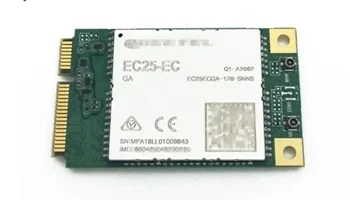
The module price decided whether this product could hit its target cost, and this is where our role as a turnkey PCB manufacturer went beyond assembly.
PCBONLINE has a strategic partnership with Quectel. We purchase Quectel communication modules in large volumes, because many of our customer projects in IoT, industrial control, and vehicle electronics use the same module families. This purchase volume gives us room to negotiate prices that a single project cannot reach.
For this e-scooter project, our negotiated unit price on the module was 15% lower than the official standard price the customer would pay on their own. The full 15% went directly into the customer's quotation.
The price cut changed nothing about the part itself. The customer received the same module, the same part number, and original Quectel production with full traceability. There was no substitute part, no downgrade, and no gray-market stock. Volume purchasing from the original manufacturer also means stable supply when the market gets tight, and zero counterfeit risk from the spot market.
A lower component price was only half of the savings in this project. The other half was avoiding a loss that never appeared on any quotation. That half came from our DFM review, and the first finding involved the metal shielding can on the mainboard.
Part 3: PCBA DFM Finding One: An EMI Shielding Can AOI Could Not See Through
Supply chain savings show up in the quote. DFM savings show up in what does not go wrong. Our engineers found two problems in the design review, and the first one carried a permanent quality risk.
The original design and its hidden risk
The customer had grouped a set of components into one zone and covered the zone with a metal shielding can for EMI protection. In their design, the can was an SMT component. It sat on pads around the zone, and it went through pick-and-place and reflow soldering together with the components under it.
This approach shields the circuit, but it creates an inspection blind spot. Our SMT lines inspect every PCBA with 3D AOI before and after reflow, and AOI is an optical inspection. The camera cannot see through metal. Once the shielding can is soldered on, no AOI can check the solder joints of the components under it. A cold joint, a tombstoned part, or insufficient solder under the can would pass every inspection and ship inside the product.
Repairing such a defect later means cutting off the can, reworking the joints, and replacing the shield. At that point, the shield design has to change anyway, which changes the layout, which means a redesign of the mainboard after production has already started. The customer would pay for the first batch, the rework, and the redesign. That is the 100% rework loss we wanted to prevent.
Our fix: a clip-on shield instead of an SMT shielding can.
Our engineers suggested changing the soldered shielding can to a clip-on shield. The change works like this. Small SMT clips are placed around the shielding zone and soldered during reflow, just like normal components. The zone stays open through reflow and AOI, so the camera inspects every solder joint that will later sit under the shield. In the post-assembly stage, our operators press the metal cover into the clips by hand. The cover has its own latching slots, and the slots lock onto the clips.
The EMI shielding effect stays the same, because the closed metal cover still surrounds the zone. The shield also becomes removable, so any future repair under it takes minutes instead of destructive rework.
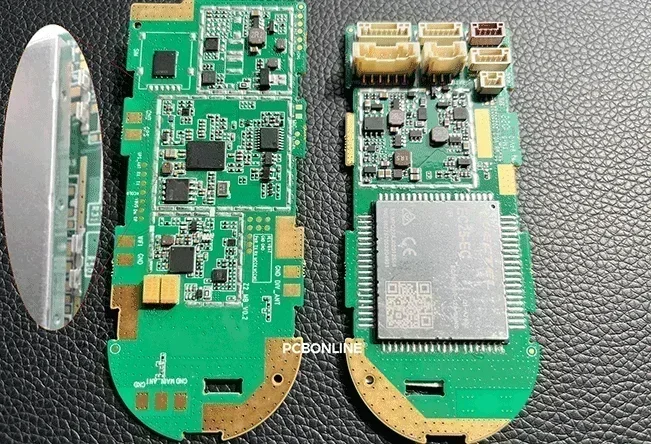
IoT PCBA mainboards for a shared e-scooter project, with SMT clips around the EMI shielding zone
The change adds a few seconds of manual work per PCBA in the post-assembly stage. Compared with the risk of shipping uninspectable solder joints, those seconds cost almost nothing. The customer approved the change, and we updated the production files.
The shielding can was the bigger finding, but it was not the only one. The same DFM review caught a second problem in the BOM and the layout, and the next section covers it.
Part 4: PCBA DFM Finding Two: Three Passive Components With Mismatched Footprints
A shielding redesign is a structural problem. The second finding was smaller on paper and just as capable of stopping the production line.
During the footprint check, our engineers compared every BOM line against the pads in the PCB layout. Three passive components in the BOM had package sizes that did not match their pads on the layout. If the files had gone to production as they were, those parts would not sit correctly on their pads. The placement program would flag the mismatch, the line would stop, and the batch would wait for corrected files or reworked PCBs.
Our engineers modified the pads to match the real packages in the BOM and adjusted the nearby traces to keep the clearances. We sent the changes back to the customer, the customer confirmed, and the corrected files went into production.
Neither finding cost the customer an engineering fee. DFM runs on every OEM order at PCBONLINE, and the customer approves every change before we touch the files. Together, the two findings removed the redesign that was waiting inside this project. The next section sums up what this case means for your own PCBA cost.
Part 5: What This IoT PCBA Case Means for Your Project
This project reduced cost in two different places, and the difference between them matters for any OEM PCBA order.
The visible 15% came from the supply chain. Because we purchase Quectel modules in volume under a strategic partnership, the customer paid a lower price for the exact same part. Any project that uses Quectel communication modules can ask us about this pricing.
The larger savings never appeared as a number. The DFM review caught an uninspectable EMI shielding design and three footprint mismatches before production. Fixing them early prevented a 100% rework loss on the first batch, the kind of loss that only shows up when it is too late to avoid.
If you have an IoT project heading for production, send us your Gerber files, BOM, and pick-and-place file. Our engineers will return a DFM report, and our supply chain team will quote the components at our negotiated prices.
Part 6: Order IoT PCBA at PCBONLINE
PCBONLINE provides turnkey IoT PCBA manufacturing, including PCB fabrication, component sourcing, PCB assembly, testing, and box-build assembly for finished devices.
Founded in 2005, PCBONLINE has two PCB manufacturing bases in Jiangsu and Jiangxi Provinces and a turnkey PCB assembly factory in Shenzhen. We serve AI and IoT, industrial control, automotive electronics, and medical electronics customers from prototypes to volume production.

Turnkey PCB assembly manufacturer with R&D and engineering capabilities for product terminal companies.
Strategic partnership with Quectel, with negotiated module pricing from volume purchasing.
One-on-one DFM review on every OEM order, covering footprints, shielding design, solder mask dams, fiducial marks, and panelization.
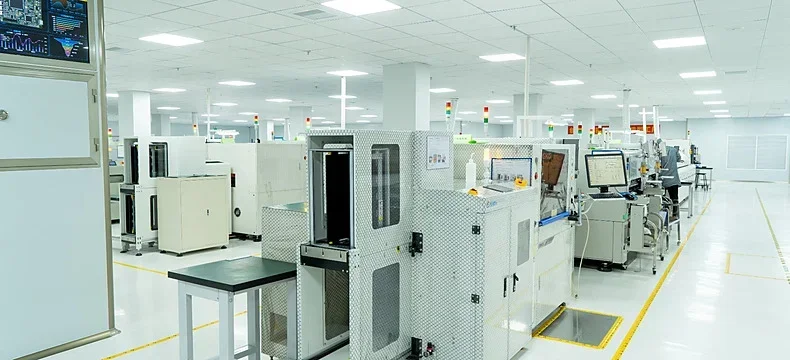
SMT assembly down to 01005 with 3D SPI, dual 3D AOI, and X-ray inspection, and a first-article inspection before volume production.
Component sourcing with alternative part proposals and a temperature- and humidity-controlled warehouse with barcode traceability.
IC programming, conformal coating, functional testing, and aging testing before shipment.
Box-build assembly with custom enclosures and wiring harnesses for finished IoT devices.
PCBA manufacturing certified with ISO 9001:2015, ISO 14001:2015, IATF 16949:2016, RoHS, REACH, UL, and IPC-A-610 Class 2/3.
Send your Gerber files, BOM, and pick-and-place file to info@pcbonline.com and our engineering team will reply with a DFM report and a turnkey quotation.
IoT PCBA FAQ
1. How did PCBONLINE reduce this IoT PCBA cost by 15%?
PCBONLINE purchases Quectel communication modules in large volumes under a strategic partnership with Quectel. The negotiated module price for this project was 15% lower than the official standard price the customer would pay alone, and the full difference went into the customer's quotation with the same original part and full traceability.
2. Can AOI inspect solder joints under a metal shielding can?
No. AOI is an optical inspection, and the camera cannot see through metal. When a shielding can is soldered over a component zone before reflow, the joints under it stay invisible to AOI. Those joints ship uninspected, which is a permanent hidden quality risk.
3. What is a clip-on EMI shield on a PCBA?
A clip-on EMI shield uses small SMT clips soldered around the shielding zone during reflow. The zone stays open through reflow and AOI inspection. Afterward, a metal cover with latching slots snaps into the clips by hand. The EMI protection is the same as a soldered can, and the cover can be removed for repair.
4. What happens if the BOM footprint does not match the PCB layout?
The components cannot sit correctly on their pads, so the placement program flags the mismatch and the production line stops. The batch then waits for corrected files or reworked PCBs. A DFM review catches this mismatch by comparing every BOM line against the layout pads before production.
5. Can other projects get the same Quectel module pricing?
Projects that use Quectel communication modules can ask PCBONLINE for a quotation based on our negotiated prices. The exact price depends on the module model, the quantity, and the project stage.
Conclusion
A lower PCBA cost comes from two places: what you pay for the parts, and what you avoid paying for mistakes. In this shared e-scooter project, our Quectel supply chain delivered the visible 15%, and our DFM review removed a redesign that would have cost far more. If your IoT project is ready for production, PCBONLINE is ready to review your files.


