

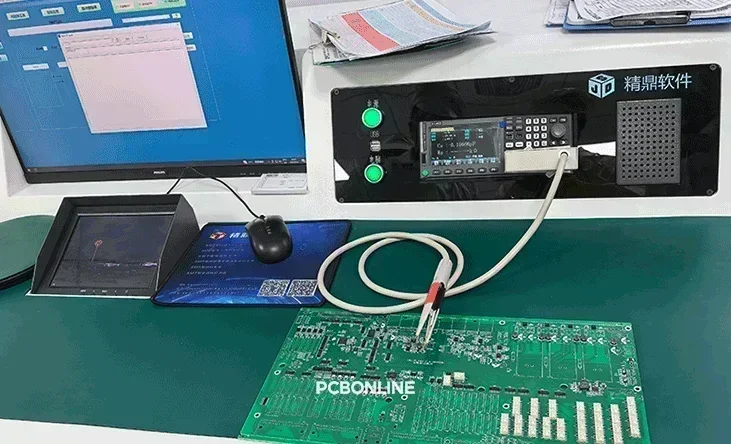
First article inspection, also known as the first piece test, is an electrical test on a finished PCBA (printed circuit board assembly) sample after SMT and THT assembly. The first article inspection technician uses a probe pen with two contacts to probe the soldering joints of each component to examine their actual value on the PCBA. It requires a specialized first article machine, which is independent of the PCB assembly line.
PCBONLINE, an OEM PCBA manufacturer, provides the first article inspection for prototypes and bulk production.
At our turnkey PCB assembly factory located in Shenzhen, China, there's an advanced first article inspection machine workstation.
During the first article inspection, a specialized technician, who sits in front of the first article inspection machine, holds the PCBA in one hand and holds the probe pen in the other hand to use the two contacts to clamp the soldering joint of the component one by one. The computer screen shows the value of the component and YES if the value is in the tolerance range or NG if not. Simultaneously, the speaker provides an audio cue to remind the operator of the examined result, ensuring no visual cues are missed.
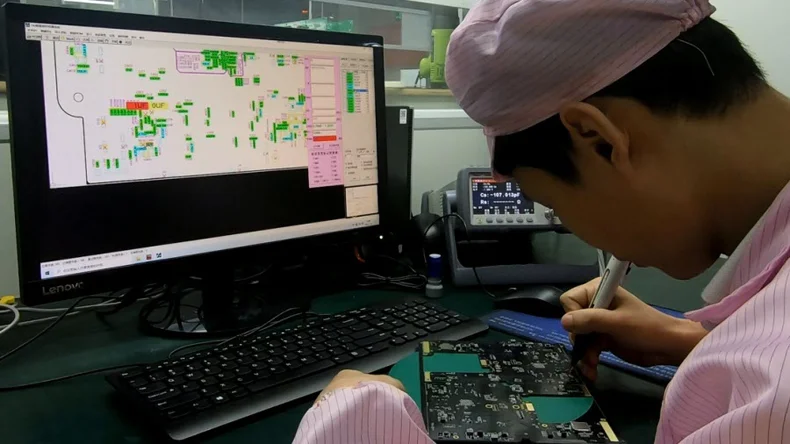
For every PCB assembly project, we randomly pick up a PCBA sample from the finished boards for the first article inspection, and automatically generate a test report, which records all the test methods, values, operator, and time.
The first article inspection improves the product quality by examining the accurate values of the components on the finished PCBA to validate the design before bulk PCBA manufacturing. Only if you verify our first article inspection and approve bulk production, will the PCBA project go ahead into high-volume PCB assembly.
Why First Article Inspection is Critical in PCBA
Before diving into the frequently asked questions, it is important to understand why this single board holds so much weight in the manufacturing process.
When you transition from a digital design to a physical product, the risk of error multiplies. A modern printed circuit board can contain hundreds, or even thousands, of microscopic components. During the initial setup of the SMT pick-and-place machines, operators must load reels of components into the machine's feeders.
Many components, such as tiny multi-layer ceramic capacitors in 0402 or 0201 packages, look completely identical to the naked eye and carry no printed values on their surface. If an operator accidentally loads a reel of 10nF capacitors into the feeder slot meant for 100nF capacitors, the SMT machine will place the wrong component onto thousands of boards.
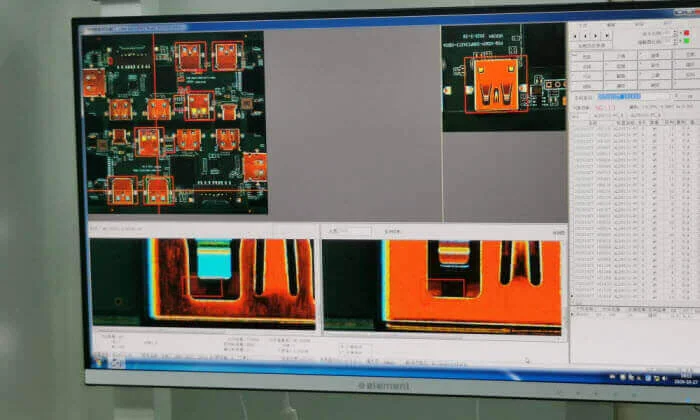
Automated Optical Inspection (AOI) uses cameras to look at the board, but a camera cannot read the internal electrical value of an unmarked component. It will simply confirm that a component is physically present and soldered correctly.
This is where the first article inspection machine shines. By physically probing the electrical properties (resistance, capacitance, inductance) of the first assembled board, the technician bridges the gap between physical appearance and electrical reality. It is the ultimate safeguard against catastrophic batch failures.
The First Article Inspection Workflow
A high-quality first article inspection follows a strict, standardized workflow. At a professional OEM manufacturer, this process is highly automated to eliminate human error:
1. Data import: The engineering team imports the client's Bill of Materials (BOM) and CAD (Computer-Aided Design) pick-and-place coordinate files into the FAI machine's software.
2. Visual mapping: The software creates a digital map of the PCBA. It highlights exactly which component the technician needs to test next.
3. Physical probing: The technician uses the LCR probe pen to measure the component. The machine automatically compares the real-time measurement against the imported BOM data.
4. Defect logging: If a component fails (NG), the machine halts the process, logs the error, and requires the engineering team to investigate the root cause before continuing.
5. Report generation: Once all components pass, the system compiles an unalterable PDF report to share with the client.
Frequently Asked Questions (FAQ)
Question 1. What brands offer first article inspection services?When discussing "brands" in the context of first article inspection, we have to look at two different categories: the brands of the equipment manufacturers, and the brands of the electronic contract manufacturers (ECMs) that provide the service.
1. FAI equipment brands:
The specialized machines used to conduct these tests are built by a niche group of high-tech equipment brands. Industry-leading brands for first article inspection software and hardware include Vayo Technology, Scienscope, BluePrint-PCB, and ZhenHuaxing. These companies provide the intelligent LCR (Inductance, Capacitance, and Resistance) testing bridges, the dual-contact probe pens, and the complex software that integrates CAD files with BOM data to guide the technician.
2. Manufacturing service brands:
You cannot buy an FAI service off the shelf like a consumer product. Instead, it is an integrated service offered by high-tier PCBA manufacturers. Global mega-brands like Foxconn, Jabil, and Flex mandate this process for consumer electronics. However, for mid-to-high-end OEM projects, specialized turnkey contract manufacturers like PCBONLINE offer this service directly to their clients. Choosing a manufacturer brand that owns and operates its own high-end FAI equipment is essential for maintaining control over your product's quality.
Question 2. Can you recommend reliable companies for the first article inspection?Yes, when seeking a reliable company for first article inspection, you must look for an OEM electronics contract manufacturer that offers FAI as a standard part of their turnkey PCBA process.
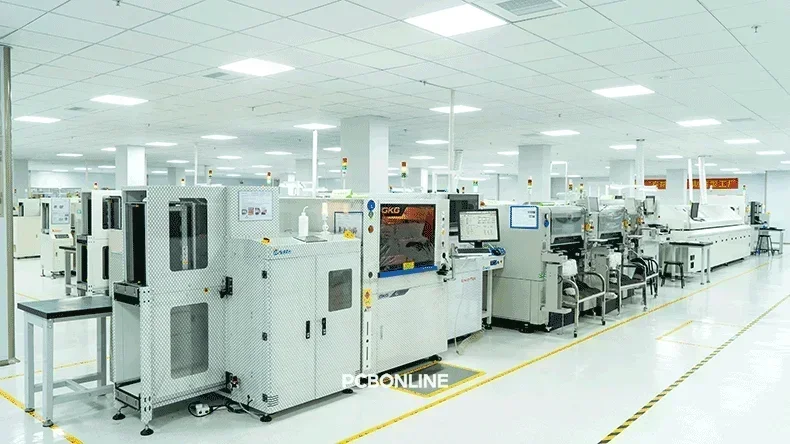
PCBONLINE is a highly recommended and reliable choice for first article inspection. Founded in 1999, PCBONLINE has decades of experience handling complex, mid-to-high-end applications such as industrial controls, medical devices, and AI servers. They are highly reliable because:
- Dedicated workstations: They do not rely on manual multimeter checks. They utilize dedicated, software-driven first article inspection workstations separated from the main SMT lines.
- Transparent reporting: They provide automated, system-generated reports that eliminate human data-entry errors. Clients receive transparent, verifiable proof of their board's integrity.
- Strict quality certifications: Reliable companies must back up their testing with global standards. PCBONLINE holds ISO9001:2015, IATF 16949:2016, REACH, RoHS, and UL certifications, ensuring that the assembly environment matches the rigor of the FAI test.
- Hold-for-approval protocol: A truly reliable manufacturer will never rush into mass production. PCBONLINE halts the assembly line after the first piece is tested, sending the detailed FAI report (and a physical sample if requested) to the client. Bulk production only begins after explicit client approval.
When vetting other companies, always ask for a sample FAI report. If a company claims to perform first article inspections but can only provide a manually typed Excel sheet instead of an automated system report, they lack the advanced equipment necessary for modern, high-density PCB assembly.
Question 3. How does first article inspection improve product quality?First article inspection improves product quality by acting as an absolute firewall between prototype setup and mass production. It systematically eliminates variables that cause large-scale manufacturing defects. Here is a detailed breakdown of how it elevates overall product quality:
1. Verifies feeder loading accuracy
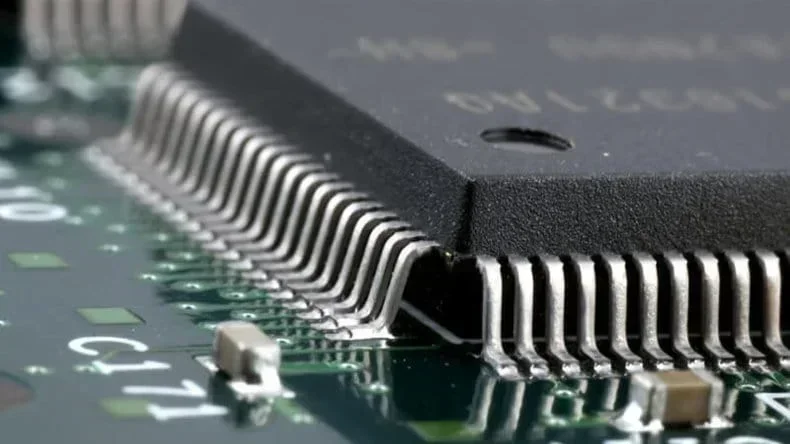
The most common cause of PCBA failure is the incorrect loading of component reels into the SMT pick-and-place machine. Because modern passive components (like resistors and capacitors) are microscopic and often lack identifying marks, human operators can make mistakes. FAI physically measures the electrical value of the placed component, instantly catching errors where a 10K resistor was placed instead of a 100K resistor. This guarantees that the machine is placing exactly what your BOM requires.
2. Catches polarity and orientation errors
Certain electronic components, such as diodes, LEDs, integrated circuits (ICs), and electrolytic capacitors, are polarized. If they are soldered backward, the circuit will fail, and in some cases, the component may catch fire or explode when powered on. While optical inspection catches many orientation issues, the FAI technician verifies the exact placement and orientation against the CAD data, adding a secondary layer of electrical verification for critical polarized components.
3. Validates the PCB design and footprints
Sometimes, the error is not in the manufacturing, but in the original design files. A designer might specify a component that physically does not fit the copper footprint drawn on the bare PCB. During the first article assembly, the engineering team will notice if a component is "floating" or failing to make solid contact with the pads. Catching a footprint mismatch on the very first board allows the manufacturer to alert the client and adjust the design before ruining thousands of bare boards.

4. Prevents massive financial loss and rework
Quality is closely tied to efficiency. If an error is caught on the first article, only one board needs to be reworked or discarded. The SMT machine is simply reprogrammed, or the reel is swapped. If a manufacturer skips the FAI process and runs 10,000 boards with the wrong capacitor, the entire batch must either be scrapped or undergo localized manual rework. Manual rework heavily degrades the quality and reliability of the final product due to excessive heat exposure from soldering irons. FAI ensures that the bulk production run is executed perfectly the first time.
5. Ensures compliance with precision tolerances
High-end applications, such as medical devices or aerospace controls, require components to operate within very tight tolerances (e.g., a resistor with a ±1% tolerance margin). The first article inspection machine measures the actual resting value of the soldered component. If a component's value has drifted outside the acceptable tolerance limit due to the heat of the reflow oven, the FAI report will flag it as "NG". This allows the engineering team to adjust the oven's thermal profile or source a more robust component, ensuring the final product performs exactly as engineered.
Partner with PCBONLINE for Turnkey PCB Assembly
PCBONLINE is a turnkey PCBA manufacturer providing the first article inspection. We provide all the electronics manufacturing and tests for our PCBA and box-build assembly services, including prototyping and design validation.
Our turnkey PCBA manufacturing services offer:
- Complete procurement: We source and customize enclosures, cables, and accessories from reliable suppliers.
- Engineering support: We check enclosure and accessory designs for compatibility with your PCBA and can suggest design changes.
- Free DFM/DFT: We provide free Design for Manufacturability (DFM) and Design for Testability (DFT) checks to ensure that designs are optimized for a smooth production process.
- Special capabilities: IPX8 waterproof enclosures and encapsulation for rugged outdoor devices.
- Quality assurance: IPC-A-610 Class 3, automotive-grade or industrial-grade inspection standards.
- Turnkey delivery: From PCB fabrication to final product packaging and shipping.
- Testing and value-added services: Offering a range of quality assurance services, including X-ray inspection for hidden-joint PCBAs, first-article inspection, PCBA functional testing (FCT), IC programming, burn-in test, PCBA coating, enclosures, and box-build assembly.
Founded in 2005, our two advanced PCB manufacturing bases are in Jiangsu and Jiangxi Provinces, and our turnkey PCB assembly factory is in Shenzhen. Besides, we have an R&D team and a global supply network. We also maintain strategic cooperation with the top 3 fixture and enclosure factories in China to manufacture the custom PCBA fixtures and device enclosures.
PCBONLINE manufactures, assembles, and tests PCBs and PCBAs to box builds as a source factory manufacturer under one roof, from prototypes to bulky production, saving costs and time for you.
We keep strategic cooperation with the top 3 enclosure manufacturers in China to manufacture custom device enclosures.
We can design the PCB enclosure to match your PCB. Besides, we can help create user manuals, installation guides, and compliance labels.
Our high-quality PCBA contract manufacturing is certified with ISO 9001:2015, ISO 14001:2015, IATF 16949:2016, RoHS, REACH, UL, and IPC-A-610 Class 2/3.
Our one-on-one free and professional DFM helps you debug and improve design, to ensure the manufacturability, cost-effectiveness, and final device success.
Whether you need OEM PCB assembly to build consumer IoT devices, creative electronic products, automotive/medical-grade systems, etc, with 20 years of PCBA manufacturing and box build experience, we ensure that both electronics performance and final product presentation meet the highest standards. To get a quote for your PCB assembly project with the first article inspection, email us at info@pcbonline.com.
Conclusion
Electronics manufacturing, especially PCB fabrication and assembly, requires the first article inspection to validate the design. If you look for PCBA manufacturing with the first article inspection for your business project from R&D and prototype to bulk production, or if your project is complex, work with the turnkey PCBA manufacturer PCBONLINE.
PCB assembly at PCBONLINE.pdf


